
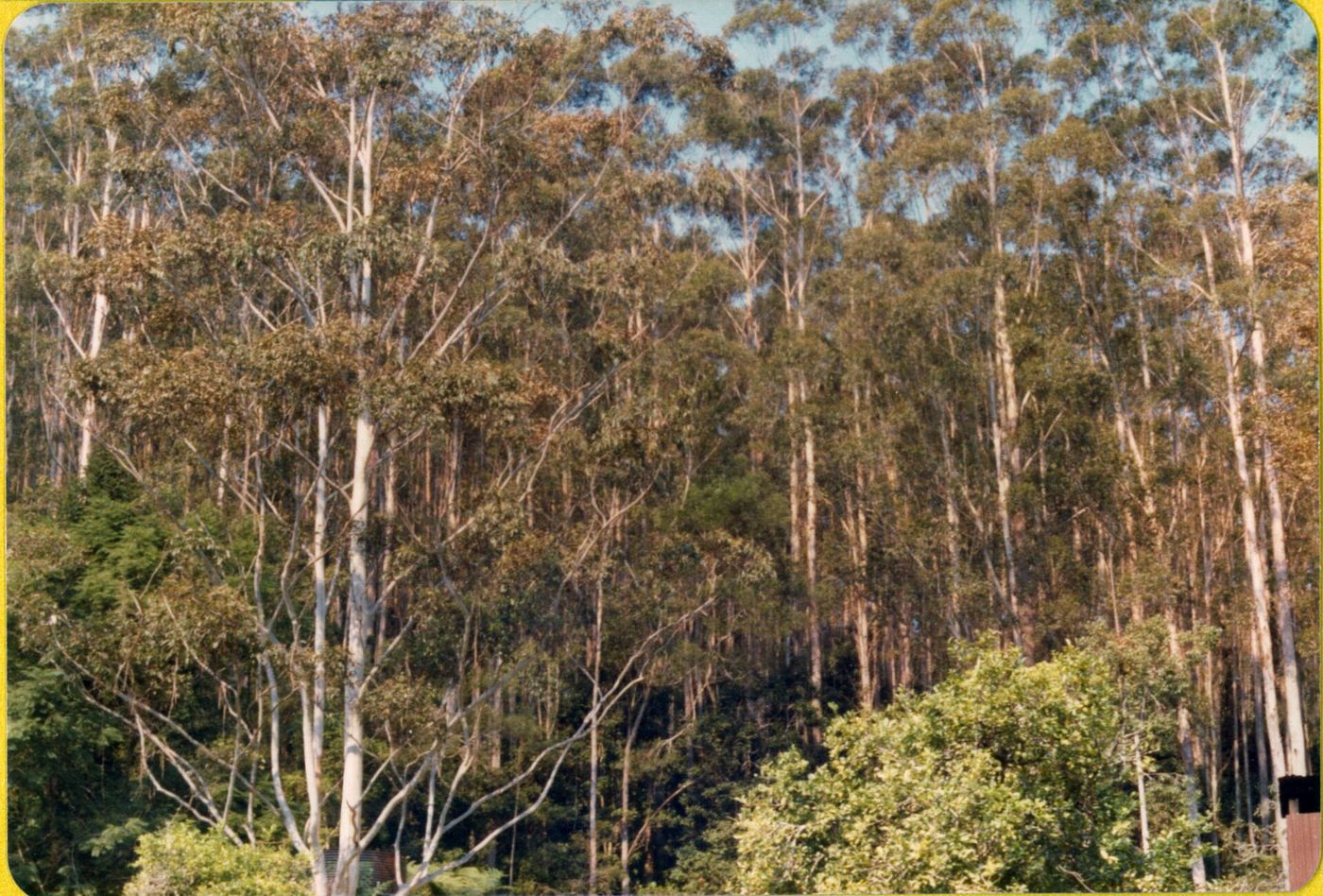
The Yowie: Australia's Hairy Man
Since the 19th century, settlers have reported a tall, hairy ape-like figure in the Australian bush, later called the yowie. Folklorists link the colonial stories to Aboriginal traditions of hairy beings, which are not the same thing. No specimen has ever been found.
Sources Tony Healy & Paul Cropper, The Yowie: In Search of Australia's Bigfoot (Anomalist Books, 2006); Trove colonial newspaper reports; Wikipedia, 'Yowie'
From the mid-1800s, colonial newspapers occasionally reported “hairy men” or “yahoos” seen in the bush of New South Wales and Queensland: tall, upright, covered in hair, sometimes with a terrible smell. In the 1970s the name yowie took hold, and researchers such as Rex Gilroy, and later Tony Healy and Paul Cropper, collected hundreds of reports.
Two different things
Many Aboriginal peoples have stories of hairy beings, known by different names in different languages and part of living cultural traditions. Folklorists caution against flattening them into a single “Aboriginal yowie.” This Ledger treats those traditions as culture, not evidence, and gives no map position.
The evidence
Australia has no native primates, ancient or modern. Despite footprint casts and blurry photos, there is no body, bone or confirmed DNA. The yowie survives as bush folklore, like its American cousin, Bigfoot.
Ledger status
Marked folklore. No map position.
Sources
- Tony Healy & Paul Cropper, The Yowie: In Search of Australia’s Bigfoot (Anomalist Books, 2006)
- Wikipedia, “Yowie” — en.wikipedia.org
- Trove, National Library of Australia, colonial ‘hairy man’ reports — trove.nla.gov.au
Part of the World Ledger, batch 1. Original text; no images are used.
Evidence ledger
Each claim in this file, the source it rests on, and how well it holds up: 2 corroborated · 1 unverified. What the labels mean.
| Claim | Source | Type · date | Status |
|---|---|---|---|
| Colonial newspapers reported hairy 'wild men' or 'yahoos' in the Australian bush in the 1800s. | Trove; Healy & Cropper (2006) | period press · 19th c. | corroborated |
| Many Aboriginal cultures have traditions of hairy beings, given many names.These are cultural traditions, not cryptid sightings, and are not mapped here. | Wikipedia; Healy & Cropper | secondary | corroborated |
| A large unknown primate lives in Australia.Australia has no native primates; no bone, body or verified DNA has been found. | Cryptozoological claims | secondary | unverified |
Discussion
Discussions activating. Per-case threads will embed here once the Giscus GitHub App is installed on the public satellite repo.
Meanwhile, join the conversation on GitHub Discussions: https://github.com/dclewis21/anomaly-ledger-community/discussions
CoS / D.C.: see Community guidelines and
SETUP.mdin the site repo for the one-click Giscus install.