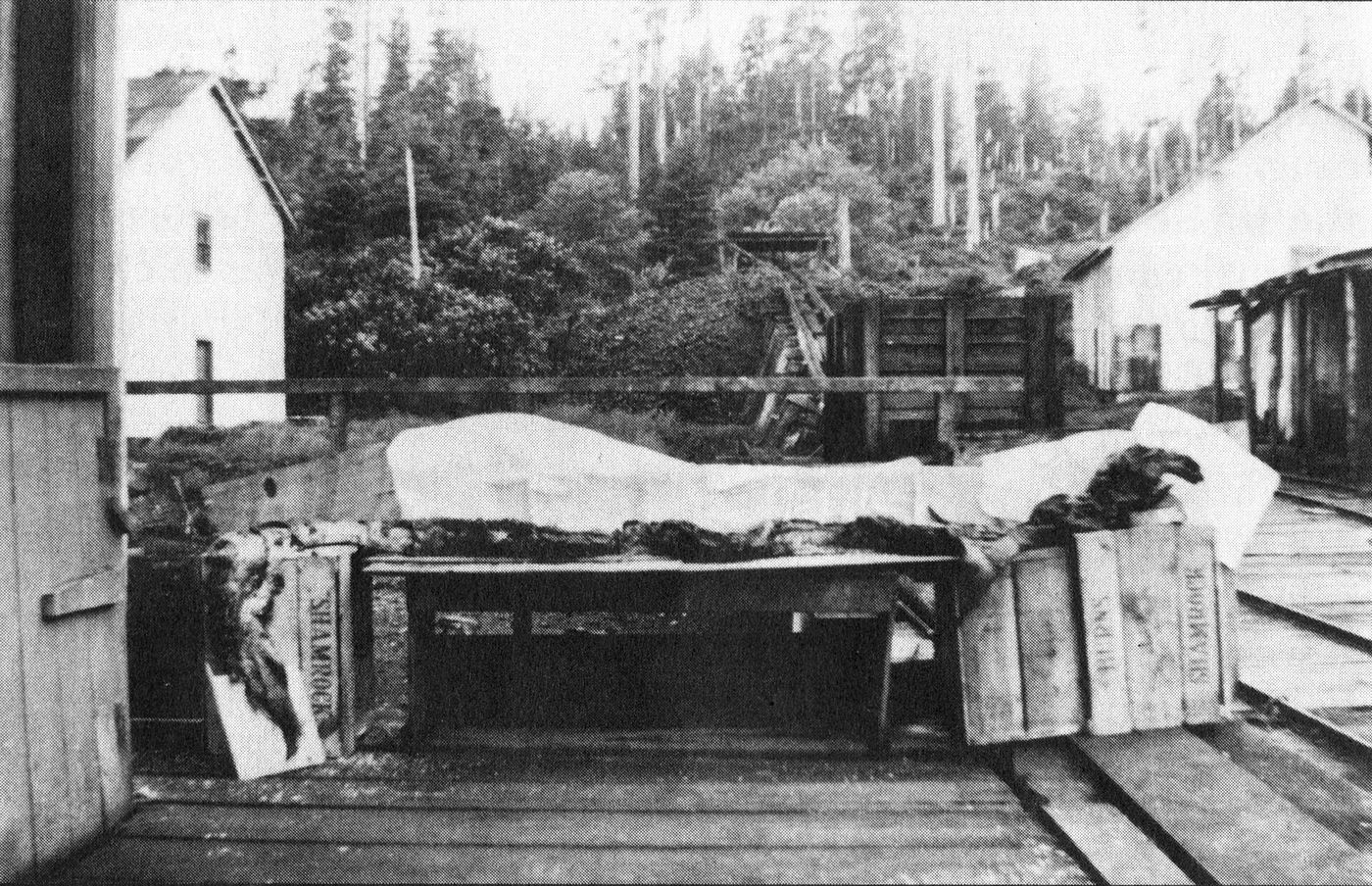
Cadborosaurus: The Sea Serpent of Victoria
Since the 1930s, people around Victoria, British Columbia, have reported a long, horse-headed sea serpent called 'Caddy'. A carcass from a whale's stomach in 1937 was claimed as a baby. Zoologists now favour known animals, and many scientists read the famous 1937 carcass as a decomposing basking shark.
Sources Darren Naish, 'The Cadborosaurus wars', Scientific American Blogs (Tetrapod Zoology); The Guardian (7 May 2026); LeBlond & Bousfield, Cadborosaurus: Survivor from the Deep (1995); Wikipedia, 'Cadborosaurus'
In 1933 a Victoria newspaper editor, Archie Wills, coined the name “Cadborosaurus,” after Cadboro Bay, for a long sea creature with a horse-like head and humps reported by boaters. Over the following decades hundreds more sightings were logged along the coast.
The carcass
In 1937 whalers at Naden Harbour on Haida Gwaii cut open a sperm whale and found a three-metre carcass with a long body and a head that looked, in the famous photo, like a camel’s. It was claimed as a baby Caddy, but a sample sent to a museum in Victoria was later discarded.
Scientists divide
In 1995 oceanographer Paul LeBlond and zoologist Edward Bousfield argued for a real unknown animal and gave it a scientific name. Zoologist Darren Naish, among others, has argued the evidence fits known animals: elephant seals, sea lions, oarfish, eels, and decomposing basking sharks, which lose their jaws and fins and look serpentine. In May 2026 the Guardian revisited the case: marine biologist Ben Speers-Roesch explained how a decaying basking shark collapses into a long “neck” and small head, while cryptozoologist John Kirk insisted it was an unknown mammal. With no samples left, it cannot be settled.
Ledger status
Marked folklore. Map position is Cadboro Bay area.
Sources
- Darren Naish, “The Cadborosaurus wars,” Scientific American Blogs — blogs.scientificamerican.com
- The Guardian, “Shark or sea monster? The Canadian marine mystery that still intrigues experts 90 years on” (7 May 2026) — theguardian.com
- Wikipedia, “Cadborosaurus” — en.wikipedia.org
Part of the World Ledger, batch 1. Original text; no images are used.
Evidence ledger
Each claim in this file, the source it rests on, and how well it holds up: 2 corroborated · 2 disputed. What the labels mean.
| Claim | Source | Type · date | Status |
|---|---|---|---|
| A sea serpent nicknamed 'Caddy' after Cadboro Bay has been reported off British Columbia since 1933. | Wikipedia; Naish (SciAm blogs) | secondary | corroborated |
| A carcass found in a sperm whale's stomach at Naden Harbour in 1937 was claimed to be a juvenile Caddy. | Naish; Guardian (2026) | press · 2026 | corroborated |
| LeBlond and Bousfield formally described 'Cadborosaurus willsi' as a new species.Zoologists reject the description; no type specimen exists. | LeBlond & Bousfield (1995) | scholarly · 1995 | disputed |
| The Naden Harbour carcass was a decomposing basking shark. | Guardian (2026), quoting marine biologist Ben Speers-Roesch | press · 2026 | disputed |
Discussion
Discussions activating. Per-case threads will embed here once the Giscus GitHub App is installed on the public satellite repo.
Meanwhile, join the conversation on GitHub Discussions: https://github.com/dclewis21/anomaly-ledger-community/discussions
CoS / D.C.: see Community guidelines and
SETUP.mdin the site repo for the one-click Giscus install.