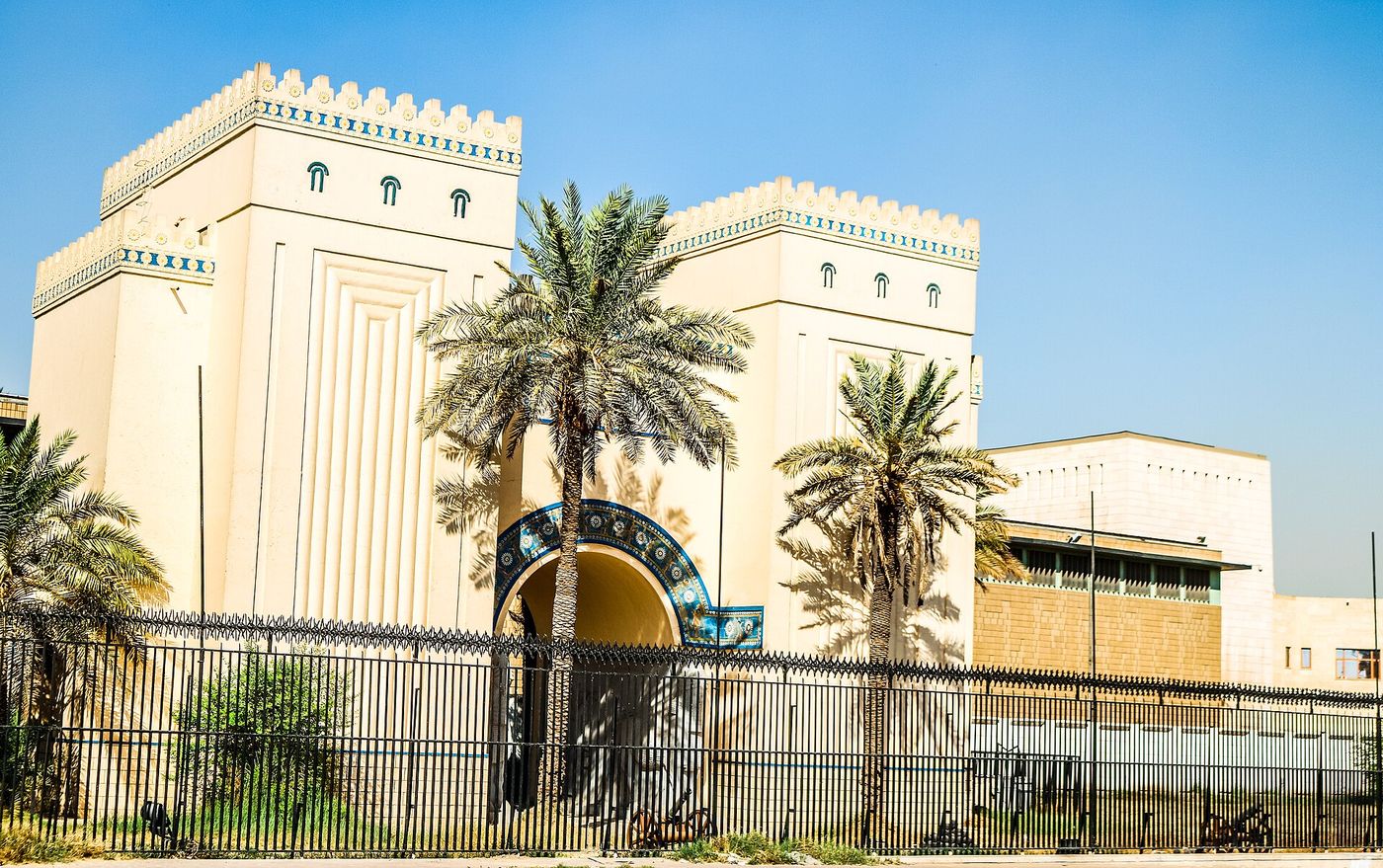
Baghdad Battery — Museum Debate
Parthian/Sasanian jars with copper and iron: König’s battery hypothesis remains popular; many archaeologists favor scroll containers.
Sources History.com Baghdad Battery overview (cite, not image); Penn Museum / academic commentary linked therein; National Museum of Iraq context
Ceramic jars with copper cylinders and iron rods from the Khujut Rabu area near Baghdad entered popular literature as possible galvanic cells after Wilhelm König’s battery hypothesis. Experimental reconstructions can produce small voltages; that does not prove ancient electrical intention. Many archaeologists read the assemblages as scroll or papyrus containers. Originals are reported lost in the 2003 Iraq Museum looting — another custody fact for the margin.
Replica voltage ≠ intention
Status disputed on the electrical interpretation; the objects’ existence in the scholarly literature is not in doubt. No History.com photos hosted here.
Evidence ledger
Each claim in this file, the source it rests on, and how well it holds up: 2 corroborated · 2 disputed · 1 unverified. What the labels mean.
| Claim | Source | Type · date | Status |
|---|---|---|---|
| Ceramic jars with copper cylinders and iron rods were found in the Khujut Rabu area near Baghdad. | History.com overview; Penn Museum / academic commentary; National Museum of Iraq context | secondary | corroborated |
| The jars were ancient galvanic cells.Many archaeologists read them as scroll or papyrus containers. | Wilhelm König's hypothesis, as summarized by History.com and academic commentary | secondary | disputed |
| Replicas can produce small voltages.That doesn't prove ancient electrical intent. | History.com overview; academic commentary | secondary | corroborated |
| The originals were lost in the 2003 Iraq Museum looting.Reported, not confirmed by this ledger. | National Museum of Iraq context, as cited | secondary · 2003 | unverified |
| A replica including solder and the clay jar as a second tin-air cell produces over 1.4 V.One experimenter, in a series that invites unconventional work; some archaeologists quoted by Chemistry World are unconvinced. Not independently replicated. | Bazes, Sino-Platonic Papers 377 (Jan 2026); Chemistry World, 23 Jan 2026 | scholarly · Jan 2026 | disputed |
Updates
-
New experimental claim, not a settled answer. Independent researcher Alexander Bazes (Sino-Platonic Papers no. 377, January 2026) argues earlier replicas left out two parts of the design, the solder and the ceramic jar, and that together they form a second 'outer' tin-air cell wired in series with the known copper-iron cell. His rebuild reached over 1.4 volts and could electroplate, etch and split water. Chemistry World (23 Jan 2026) reported that some archaeologists who have studied the object aren't convinced, and one said it may not have been a battery at all. A working replica shows the design could make power; it doesn't show the jars were used that way. Status stays disputed.
Sources Bazes, A., 'The Baghdad Battery: Experimental Verification of a 2,000-Year-Old Device Capable of Driving Visible and Useful Electrochemical Reactions at over 1.4 Volts', Sino-Platonic Papers 377, Jan 2026: https://sino-platonic.org/complete/spp377_baghdad_battery.pdf · Tom Metcalfe, 'Was the Baghdad battery really two cells?', Chemistry World, 23 Jan 2026: https://www.chemistryworld.com/news/was-the-baghdad-battery-really-two-cells/4022804.article
Discussion
Discussions activating. Per-case threads will embed here once the Giscus GitHub App is installed on the public satellite repo.
Meanwhile, join the conversation on GitHub Discussions: https://github.com/dclewis21/anomaly-ledger-community/discussions
CoS / D.C.: see Community guidelines and
SETUP.mdin the site repo for the one-click Giscus install.