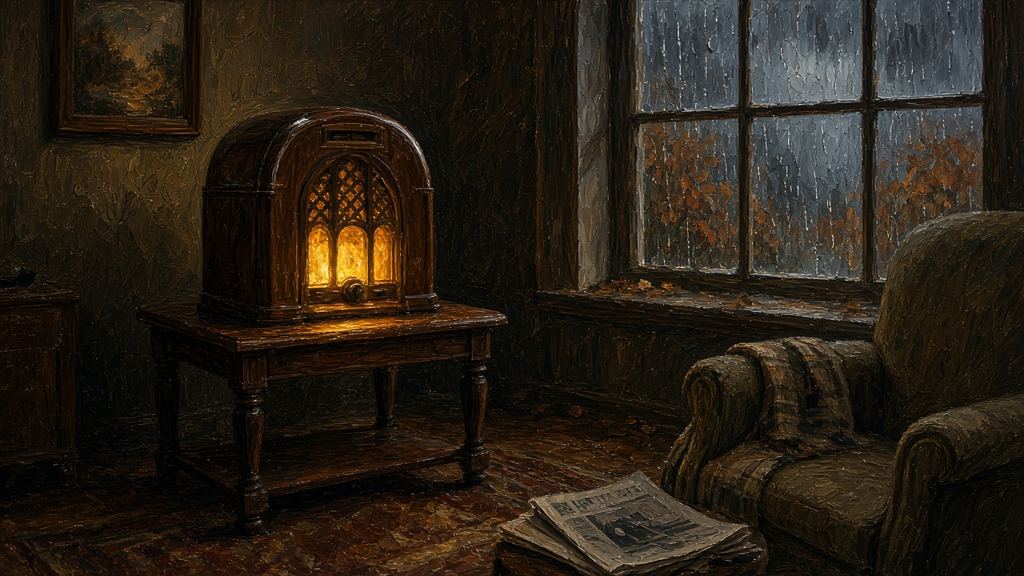
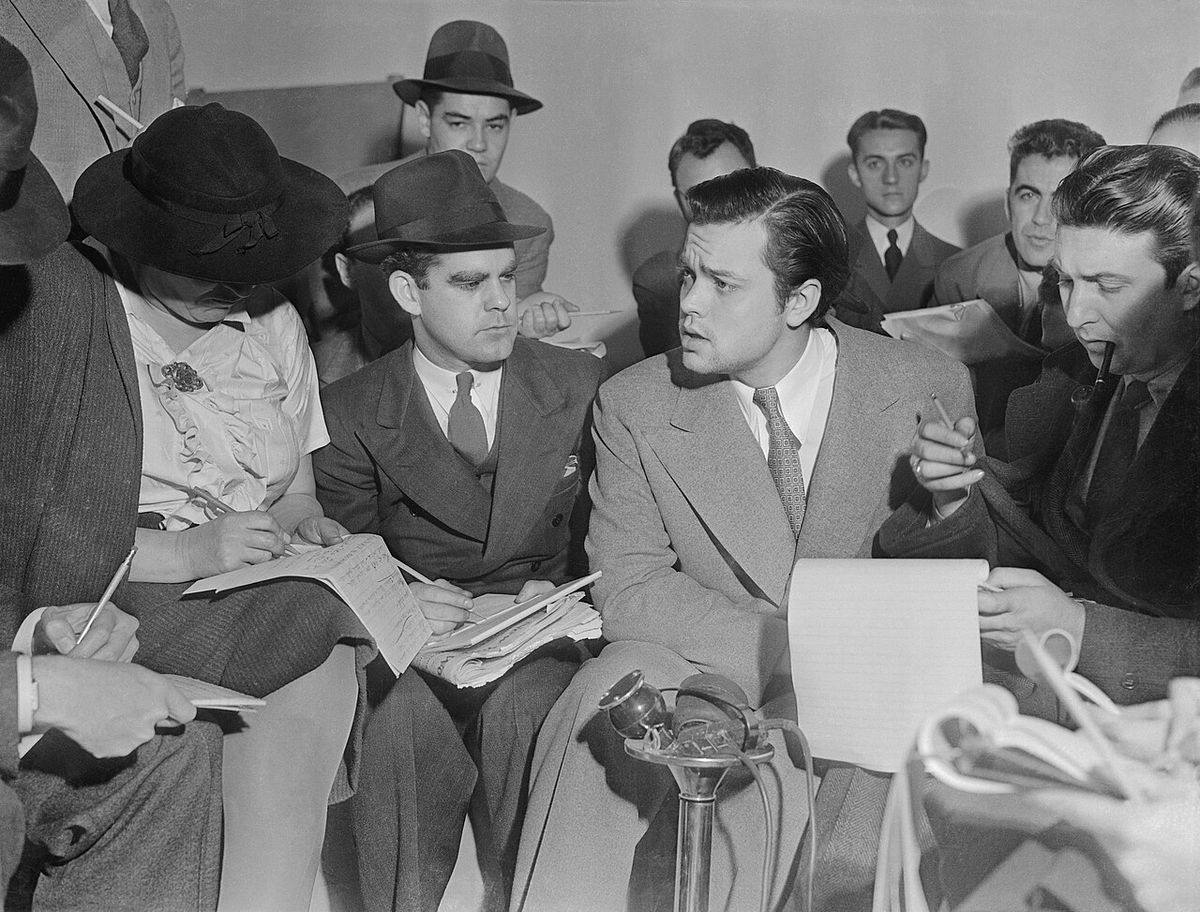

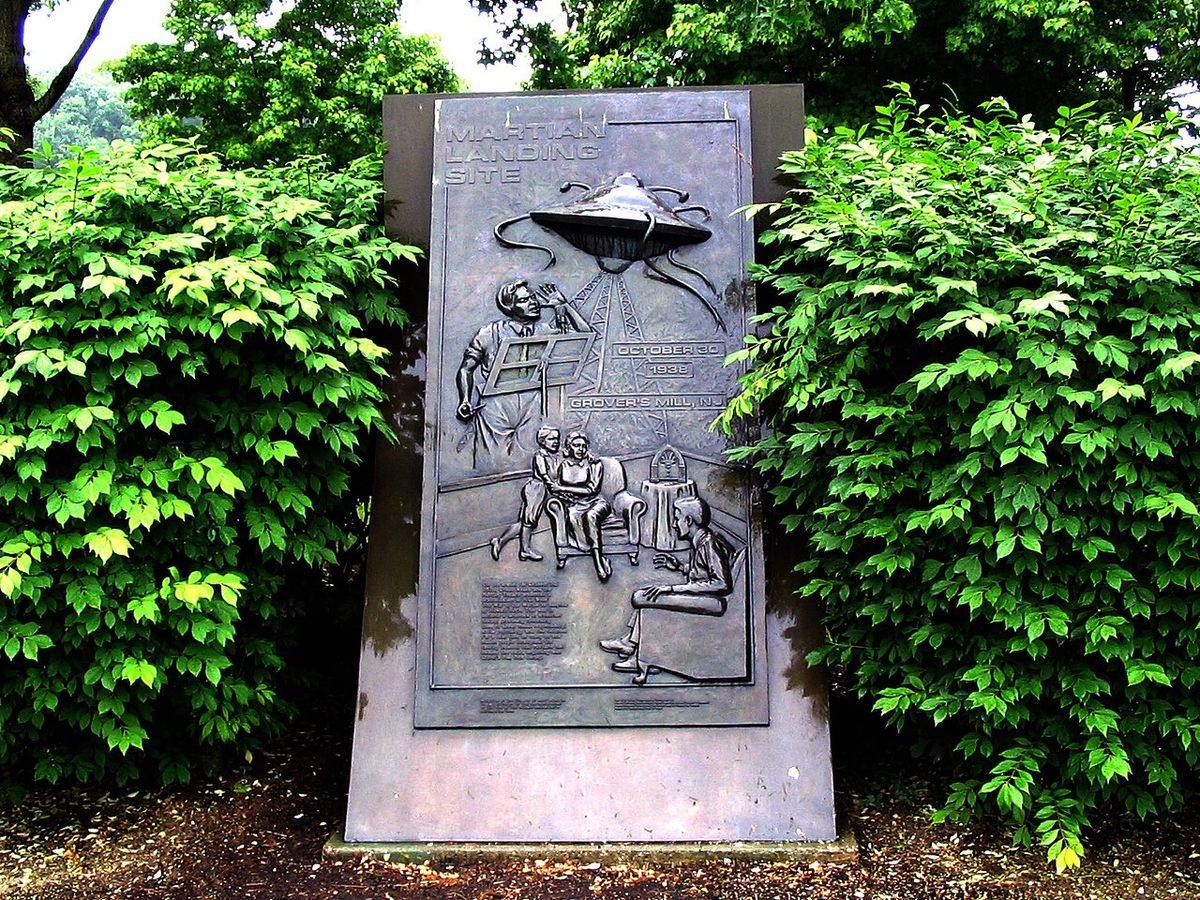

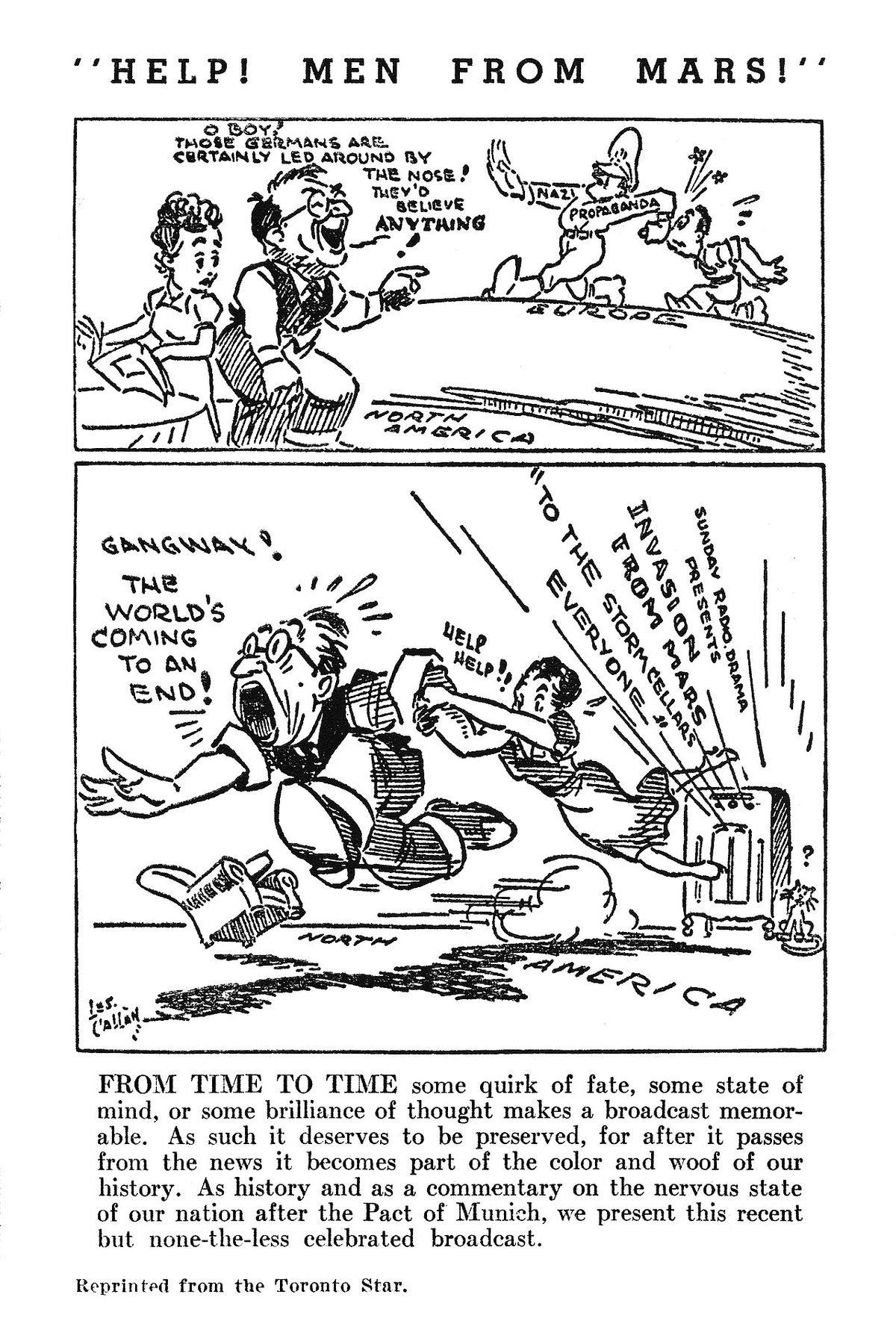

No original photo or video of this event is known.
The War of the Worlds Panic That Mostly Wasn't, 1938
Last reviewed Next review
We review and update every article weekly. When the record changes, so does the article. How we review
On October 30, 1938, Orson Welles's Mercury Theatre broadcast a Martian invasion as fake news bulletins.
Verdict: The broadcast was real, but the nationwide panic was mostly a newspaper creation.
Sources Jefferson Pooley and Michael J. Socolow, “Orson Welles’ War of the Worlds panic myth,” Slate (28 Oct 2013), citing the C.E. Hooper survey (via Broadcasting), Princeton Office of Radio Research, Hadley Cantril (1940) and W. Joseph Campbell; The New York Times, 31 Oct 1938 (full text read via the war-of-the-worlds.org reproduction)
On Sunday evening, October 30, 1938, CBS’s Mercury Theatre on the Air performed an adaptation of H. G. Wells’s The War of the Worlds, staged as a series of breaking news bulletins about a Martian landing in New Jersey. By the next morning, front pages were full of terrified listeners, jammed switchboards and people fleeing their homes. The New York Times ran the headline “Radio Listeners in Panic, Taking War Drama as Fact.”
The broadcast was real. We mark the nationwide panic as a hoax, one the newspapers built.
How many people were listening?
Media historians Jefferson Pooley and Michael J. Socolow set out the evidence in a 2013 piece for Slate, drawing on their own research and that of W. Joseph Campbell:
- The ratings call-around. The C.E. Hooper ratings service phoned 5,000 households that night as part of its regular national survey. Only 2 percent named the Welles program or a radio “play,” and none said they were listening to a news broadcast, according to the summary published in Broadcasting. Welles was up against one of the most popular shows of the time, Edgar Bergen’s Chase and Sanborn Hour on NBC.
- Local pre-emptions. Several CBS affiliates, including Boston’s WEEI, didn’t carry the broadcast at all.
- CBS’s own survey. A network survey the next day found that few people had heard it. CBS executive Frank Stanton later recalled that most people hadn’t, and those who had took it as a prank.
What about the hysteria?
- Researchers at Princeton’s Office of Radio Research checked a rumor that people were treated for shock at a Newark hospital and found it inaccurate. Six New York City hospitals surveyed weeks later had no record of cases brought in because of the broadcast.
- Pooley and Socolow write that “no specific death has ever been conclusively attributed” to the drama. A newspaper report of a Baltimore listener dying of a heart attack was never followed up or confirmed.
- One Washington Post reader wrote in to say he’d walked down F Street during the broadcast, past stores with radios playing, and saw nothing like mass hysteria.
What the papers said at the time
The 1938 pages show how quickly the story grew once it went out on the wires.
- 31 October, El Centro, California. The Imperial Valley Press ran a United Press story on its front page under the headline “Inquiry Launched In Program That Terrorized Scores.” According to our check of the page image, the UP lede said the play had caused “thousands of persons in every part of the country” to believe Martians had landed. The story reported that the FCC chairman had asked for the script and strung together anecdotes from Indianapolis, Toledo, Chicago, Salt Lake City and Newark. It also carried a separate item about a coincidental power failure in Concrete, Washington.
- 1 November, Wellington, New Zealand. The Evening Post ran a Press Association cable, “Panic in U.S.A.” It said “hundreds of hysterical listeners” had rushed out of their homes with wet towels over their faces, and that a woman ran into an Indianapolis church shouting that New York was destroyed. That is the same Indianapolis anecdote the UP carried in El Centro. The same cable credited the Associated Press with saying that milder panics had occurred across America.
- 2 November, Wellington. A second cable, “Martian Scare,” went further. It said “never in the history of the United States has such a wave of terror and panic swept the continent,” and reported that “two people died of heart failure and fifteen cases of shock were admitted to Newark hospital alone.”
Two days after the broadcast, a reader on the other side of the world was reading about deaths. That Newark hospital figure is exactly the rumor Princeton’s researchers later checked and found inaccurate, and no death has ever been confirmed. We read the 1938 pages as solid evidence of what newspapers reported, not of what happened.
Where the panic came from
Pooley and Socolow argue that the newspapers had a motive. Radio had been taking advertising from print through the Depression, and the Welles story let papers show advertisers and regulators that radio couldn’t be trusted with news. A New York Times editorial headed “Terror by Radio” scolded radio officials. Campbell’s survey of the coverage found that the story dropped off most front pages within a day or two, which isn’t how papers treat a real national emergency.
The legend then grew. In 1940, Princeton’s Hadley Cantril published The Invasion From Mars, which estimated that about a million people had been frightened. Pooley and Socolow point out that Cantril relied on a survey taken six weeks later, after all the publicity, which he himself admitted gave an audience figure more than double any other measure. They also say he blurred “frightened” or “excited” with actual panic. The FCC got the networks to agree informally not to use fake news bulletins again, but no rule was issued and neither CBS nor Welles was sanctioned.
Some people were scared
None of this means nobody was frightened. Some listeners clearly were. Wire services relayed stories of frightened (unnamed) listeners, and one woman sued CBS for “nervous shock” (the suit was quickly dismissed). The point is scale. A real and limited reaction was reported as a national stampede, and repetition has kept it that way for nearly ninety years.
Sources
- Jefferson Pooley and Michael J. Socolow, “Orson Welles’ War of the Worlds panic myth: The infamous radio broadcast did not cause a nationwide hysteria,” Slate, 28 Oct 2013 (citing the C.E. Hooper survey summary in Broadcasting, the Princeton Office of Radio Research, Hadley Cantril’s The Invasion From Mars (1940), and W. Joseph Campbell’s analysis of newspaper coverage); slate.com
- “Radio Listeners in Panic, Taking War Drama as Fact,” The New York Times, 31 Oct 1938 p. 1: nytimes.com (paywalled); full text read via the reproduction at war-of-the-worlds.org
- United Press, “Inquiry Launched In Program That Terrorized Scores,” Imperial Valley Press (El Centro, CA), 31 Oct 1938, p.1. Library of Congress, Chronicling America (checked on the page image by the research desk; linked only, not reproduced): loc.gov
- Press Association cable, “Panic in U.S.A.,” Evening Post (Wellington), 1 Nov 1938, via Papers Past (National Library of New Zealand): paperspast.natlib.govt.nz
- Press Association cable, “Martian Scare,” Evening Post (Wellington), 2 Nov 1938, via Papers Past: paperspast.natlib.govt.nz
Weighing it
Hoax, for the “nationwide panic,” not for the broadcast. It’s the same pattern we keep finding, from the 1896 Sacramento airship to modern viral clips: a real event, a newspaper with reasons to make it bigger, and a story that outgrows the evidence. Part of the October Ledger.
Verdict
Hoax The broadcast was real, but the nationwide panic was mostly a newspaper creation.
Evidence ledger
Each claim in this file, the source it rests on, and how well it holds up: 2 corroborated · 2 disputed · 2 unverified · 2 debunked. What the labels mean.
| Claim | Source | Type · date | Status |
|---|---|---|---|
| CBS's Mercury Theatre aired The War of the Worlds as mock news bulletins on 30 Oct 1938. | Pooley & Socolow, Slate | secondary · 28 Oct 2013 | corroborated |
| Only 2% of 5,000 households in the C.E. Hooper ratings call-around named the Welles program, and none called it news. | C.E. Hooper survey (via Broadcasting), cited by Pooley & Socolow | secondary · 1938 / 2013 | corroborated |
| Listeners across the country panicked and fled their homes.Hospital checks and ratings data don't support a national stampede (Pooley & Socolow). | The New York Times, “Radio Listeners in Panic, Taking War Drama as Fact” (full text via war-of-the-worlds.org reproduction) | period press · 31 Oct 1938 | debunked |
| About a million people were frightened.Based on a survey taken six weeks later, after heavy publicity. | Hadley Cantril, The Invasion From Mars, as discussed by Pooley & Socolow | scholarly · 1940 | disputed |
| Someone died because of the broadcast.“No specific death has ever been conclusively attributed.” | Newspaper report of a Baltimore listener, per Pooley & Socolow | period press · 1938 | unverified |
| The broadcast led “thousands of persons in every part of the country” to believe Martians had invaded.Wire copy built from anecdotes; we checked it on the LoC page image. Linked, not hosted. | United Press, “Inquiry Launched In Program That Terrorized Scores,” Imperial Valley Press (El Centro, CA), p.1 | period press · 31 Oct 1938 | disputed |
| Two people died of heart failure, and fifteen shock cases were admitted to a Newark hospital.Princeton's Office of Radio Research found the Newark shock story inaccurate; Pooley & Socolow: no death has ever been conclusively attributed. | Press Association cable from New York, “Martian Scare,” Evening Post (Wellington) | period press · 2 Nov 1938 | debunked |
| Hundreds of listeners fled their homes with wet towels over their faces.Unnamed people in relayed wire copy, a day after the broadcast. | Press Association cable, “Panic in U.S.A.,” Evening Post (Wellington) | period press · 1 Nov 1938 | unverified |
Update log
-
We added this case file.
-
Correction: the Evening Post cable says "hundreds of hysterical listeners", not New Yorkers. We changed the claim to match.
Sources https://paperspast.natlib.govt.nz/newspapers/EP19381101.2.87
-
Source re-check: we read the full New York Times front-page story of 31 Oct 1938 via the reproduction at war-of-the-worlds.org (the NYT page itself is paywalled). It supports the headline and the fleeing, switchboard and police-call claims; we now cite both links.
Sources https://www.war-of-the-worlds.org/Radio/Newspapers/Oct31/NYT.html · https://www.nytimes.com/1938/10/31/archives/radio-listeners-in-panic-taking-war-drama-as-fact-many-flee-homes.html
-
Weekly re-check of sources; no newer change to the record. Next check November 9, 2026.
Discussion
Discuss this case on the on-site Community board — no GitHub account required. Prefer a private tip for the editorial team? Submit a Sighting.
House rules: Community guidelines.