
The Kaimanawa Wall: A "Pyramid" That Is Rock
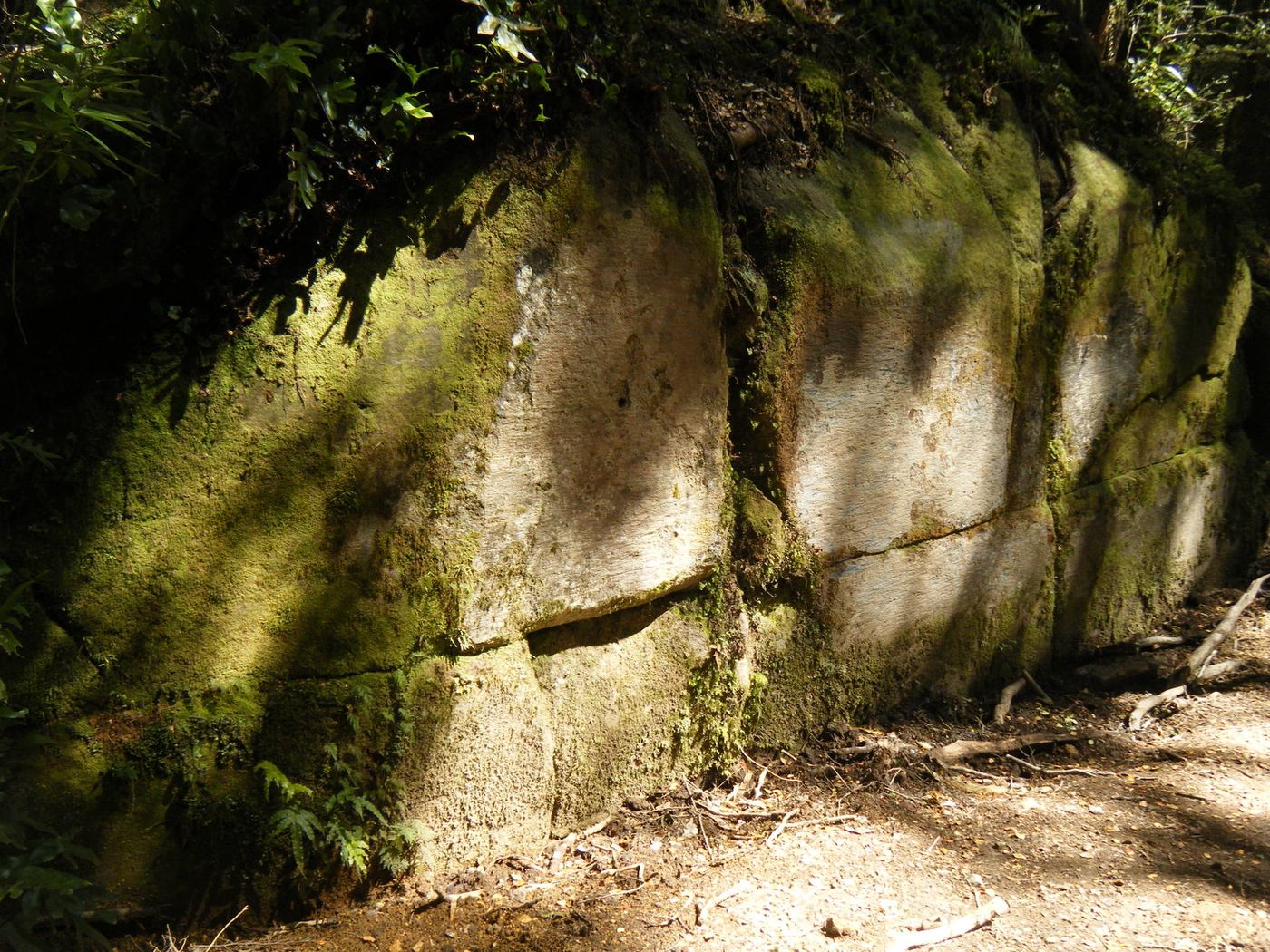
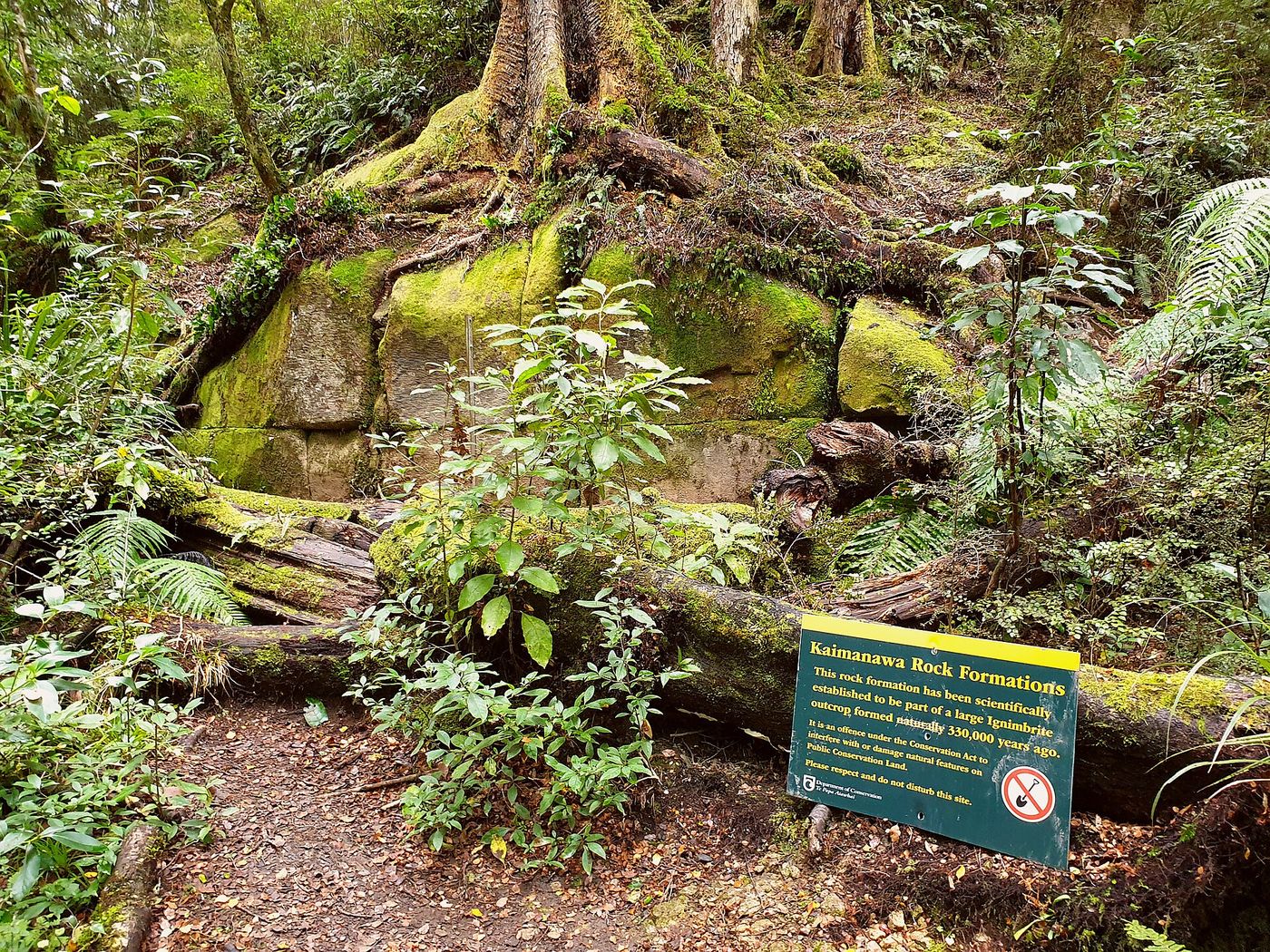
A block-like outcrop in New Zealand's central North Island was promoted in the 1990s as the remains of a pre-Māori pyramid. Geologists showed it is naturally jointed ignimbrite, volcanic rock that cracks into regular blocks.
Sources Te Ara – the Encyclopedia of New Zealand, 'The Kaimanawa wall' (Manatū Taonga); Department of Conservation and GNS Science statements; Wikipedia, 'Kaimanawa wall'
In 1996 a New Zealand magazine and then fringe authors began promoting a set of large, squared blocks in the bush south of Lake Taupō as the Kaimanawa wall: the remains of a pyramid or structure built before Māori arrived, perhaps by a vanished white or Celtic people.
What it is
Geologists from the Institute of Geological and Nuclear Sciences examined it. The blocks are ignimbrite, a rock formed from hot volcanic ash that settled and welded. As ignimbrite cools it often cracks along regular joints, producing surprisingly square blocks. This outcrop belongs to a sheet roughly 330,000 years old that runs underground beyond the “wall.”
Why it matters
Te Ara, the government’s encyclopedia, notes the story’s connection to a long line of claims that someone other than Māori settled New Zealand first, claims that have been used to belittle Māori history. The rocks are interesting for their geology, not for a lost race.
Ledger status
Marked hoax for the structure claim. Map position is region level within a conservation area.
Sources
- Te Ara, “The Kaimanawa wall” — teara.govt.nz
- Wikipedia, “Kaimanawa wall” — en.wikipedia.org
Part of the World Ledger, batch 1. Original text; no images are used.
Evidence ledger
Each claim in this file, the source it rests on, and how well it holds up: 2 corroborated · 1 debunked. What the labels mean.
| Claim | Source | Type · date | Status |
|---|---|---|---|
| An outcrop of large, regular blocks in the Kaimanawa Forest Park was promoted in 1996 as a man-made wall. | Te Ara; Wikipedia | official | corroborated |
| The 'wall' is naturally jointed Rangitaiki ignimbrite, about 330,000 years old. | GNS Science / Te Ara | scholarly | corroborated |
| It was built by a pre-Māori civilization.Also criticized as an attempt to undermine Māori history. | Fringe authors | secondary · 1996 | debunked |
Discussion
Discussions activating. Per-case threads will embed here once the Giscus GitHub App is installed on the public satellite repo.
Meanwhile, join the conversation on GitHub Discussions: https://github.com/dclewis21/anomaly-ledger-community/discussions
CoS / D.C.: see Community guidelines and
SETUP.mdin the site repo for the one-click Giscus install.