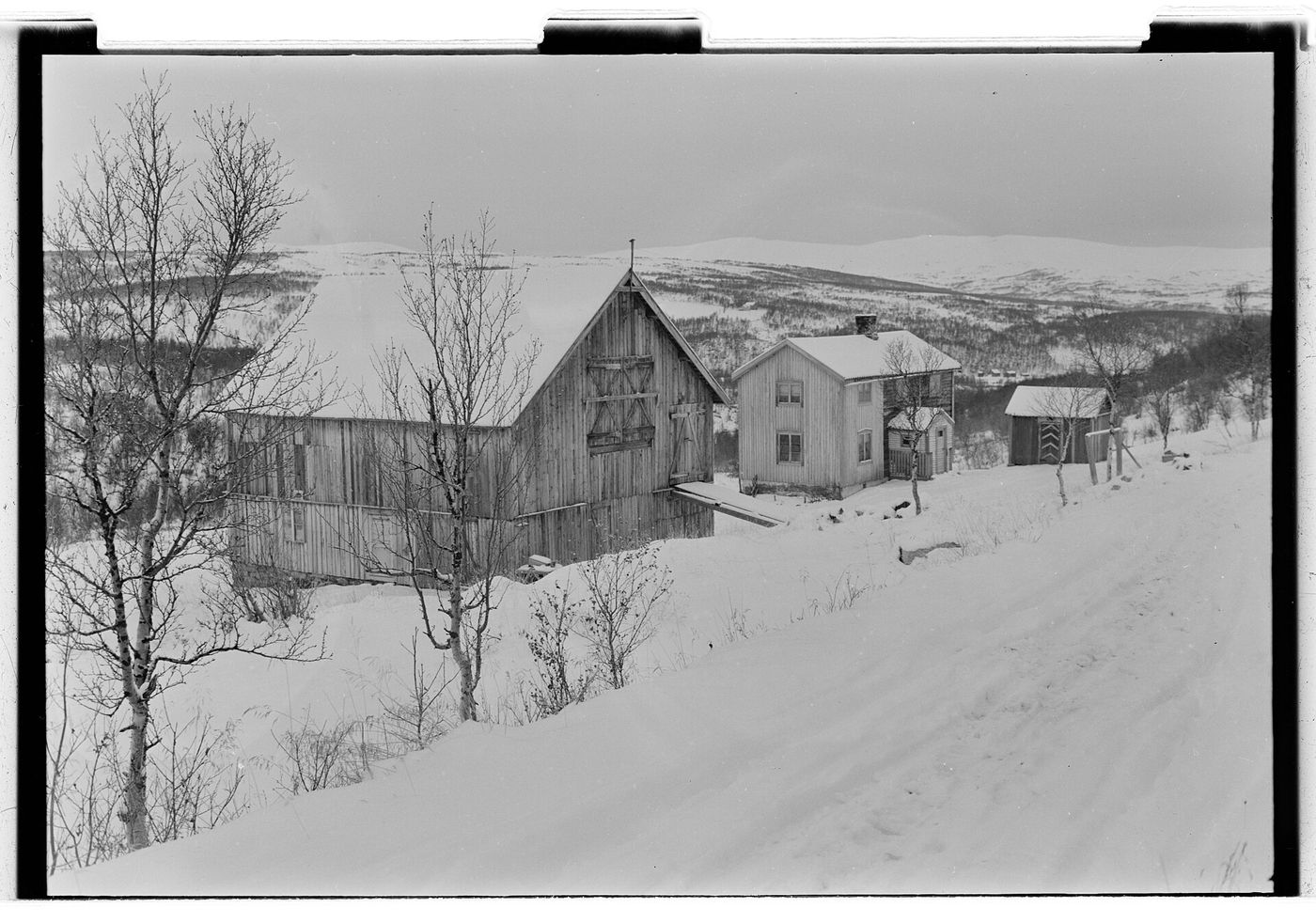
The Hessdalen Lights: A Norwegian Valley With Its Own Light Show
Since at least the 1930s, and in a burst in the early 1980s, people in the Hessdalen valley of central Norway have seen lights that hover, drift and flare. Unlike most mystery lights, these have been watched by instruments for decades. What they are is still not settled.
Sources Project Hessdalen (hessdalen.org); M. Teodorani, 'A long-term scientific survey of the Hessdalen phenomenon', Journal of Scientific Exploration 18 (2004); Paiva & Taft, Journal of Atmospheric and Solar-Terrestrial Physics (2010); Wikipedia, 'Hessdalen lights'
Hessdalen is a sparsely populated valley in Trøndelag, central Norway. Residents have described lights there since at least the 1930s, but from December 1981 the reports came several times a week: white and yellow balls that hovered for long periods, drifted slowly, or shot along the valley.
Watching with instruments
In 1983 Norwegian and Swedish researchers started Project Hessdalen, one of the few long-running attempts to study a mystery light with equipment rather than anecdotes. An automated station has watched the valley since the late 1990s, and visiting teams, including Italian astrophysicist Massimo Teodorani, have recorded spectra and video. The sightings dropped sharply after the mid-1980s, but still occur.
What they might be
Proposals in the scientific literature include burning dust or combustion of gases, a plasma formed in air charged by the valley’s rocks and mine tailings, and more exotic dusty-plasma models. None has been confirmed, and the lights remain a rare case where a recurring phenomenon is both real and unexplained.
Ledger status
Marked open. The lights are instrumented and real; their mechanism is not established. Map position is approximate (town or region level).
Sources
- Project Hessdalen — hessdalen.org
- M. Teodorani, “A long-term scientific survey of the Hessdalen phenomenon,” Journal of Scientific Exploration 18 (2004) — ADS
- G. S. Paiva & C. A. Taft, J. Atmos. Sol.-Terr. Phys. (2010) — ADS
- Wikipedia, “Hessdalen lights” — en.wikipedia.org
Part of the World Ledger, batch 1. Original text; no images are used.
Evidence ledger
Each claim in this file, the source it rests on, and how well it holds up: 3 corroborated · 1 disputed · 1 unverified. What the labels mean.
| Claim | Source | Type · date | Status |
|---|---|---|---|
| Unidentified lights have been reported in a 12 km stretch of the Hessdalen valley since at least the 1930s. | Wikipedia; Project Hessdalen | secondary | corroborated |
| Reports peaked from late 1981 to 1984, prompting Project Hessdalen fieldwork from 1983. | Project Hessdalen | primary record · 1983– | corroborated |
| An automated measurement station has recorded the lights with cameras and other instruments. | Project Hessdalen; Teodorani (JSE 2004) | scholarly · 2004 | corroborated |
| The lights are a natural plasma phenomenon, possibly involving dust from the valley's rocks.Several competing physical models; none confirmed. | Paiva & Taft (JASTP 2010) and other proposals | scholarly · 2010 | disputed |
| The lights are craft. | Popular claims | secondary | unverified |
Discussion
Discussions activating. Per-case threads will embed here once the Giscus GitHub App is installed on the public satellite repo.
Meanwhile, join the conversation on GitHub Discussions: https://github.com/dclewis21/anomaly-ledger-community/discussions
CoS / D.C.: see Community guidelines and
SETUP.mdin the site repo for the one-click Giscus install.