Feature reference (not a verified entrance)
Yarrangobilly Caves
Last reviewed: not yet Next review
Yarrangobilly Caves is a show cave in New South Wales, Australia.
Access
We haven't checked access for this place. Check the land manager's or local tourism site for hours, fees and closures, and stay off private or closed land.
Safety & respect
Stay on marked paths and behind barriers. Ground near caves, sinkholes, geysers and cliffs can be unstable or hot.
Lore note
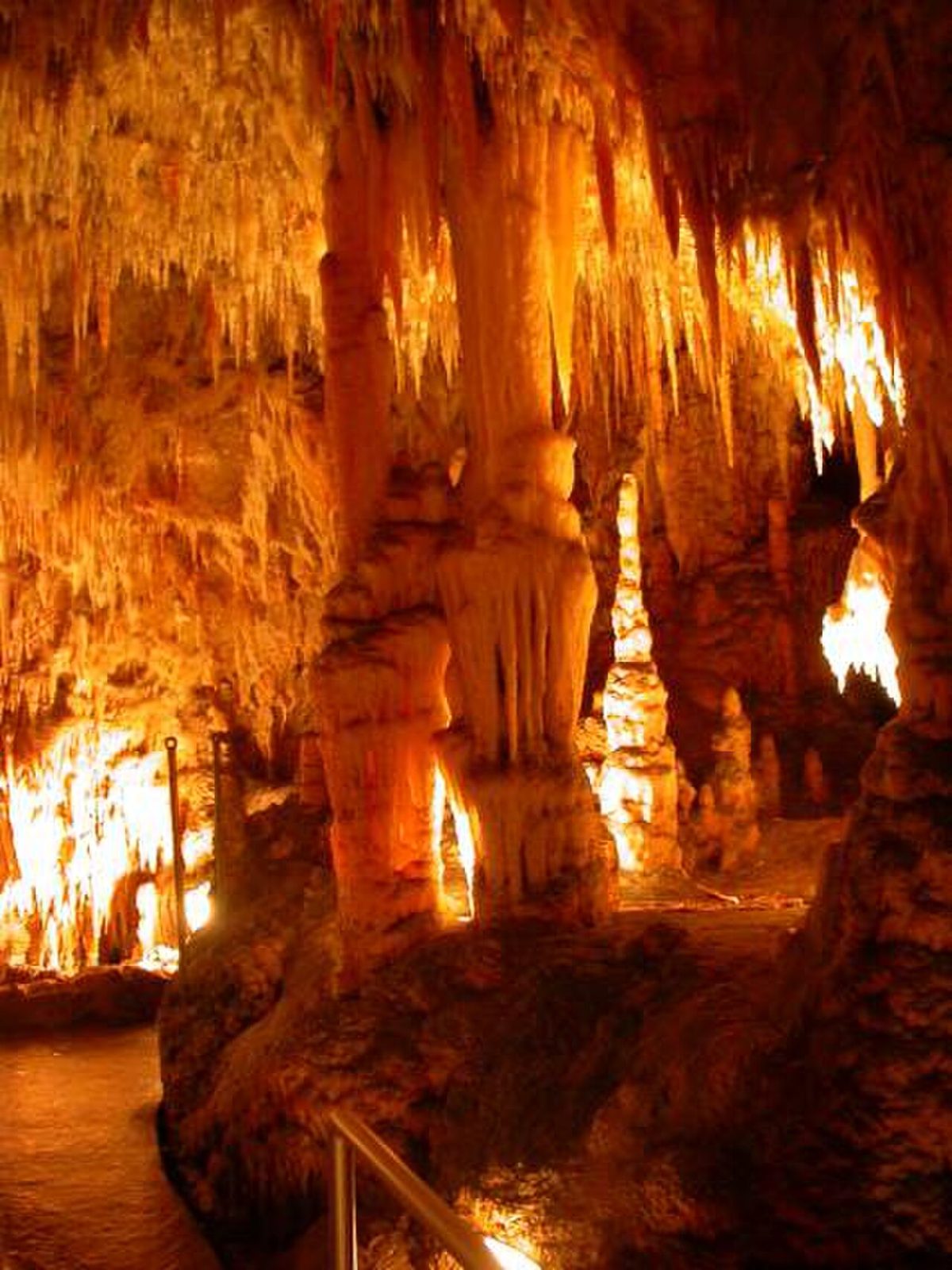
The Yarrangobilly Caves are located in a 12-kilometer-long (7.5 mi) karst region along the Yarrangobilly River valley in the north of Kosciuszko National Park, New South Wales, Australia. Discovered to British colonists by a cattleman, the Yarrangobilly Caves system includes several independent limestone caves formed over different time periods, from several million to a few hundred thousand years old. The older examples are in higher strata and have more speleothem decoration.
Map links
Official / public map link · Approx. -35.7251, 148.4914: feature coordinate, not a checked entrance · Pin source: Wikipedia article coordinates, cross-checked against Wikidata Q8049538 P625 (within 2 km)
Sources
- Wikipedia, Yarrangobilly Caves (CC BY-SA 4.0; read 1 Nov 2026): https://en.wikipedia.org/wiki/Yarrangobilly_Caves
- Wikidata, Q8049538 (coordinate location P625, country P17; read 1 Nov 2026): https://www.wikidata.org/wiki/Q8049538
The Yarrangobilly Caves are located in a 12-kilometer-long (7.5 mi) karst region along the Yarrangobilly River valley in the north of Kosciuszko National Park, New South Wales, Australia. Discovered to British colonists by a cattleman, the Yarrangobilly Caves system includes several independent limestone caves formed over different time periods, from several million to a few hundred thousand years old. The older examples are in higher strata and have more speleothem decoration.
This entry is part of our world atlas. The summary above is adapted from the Wikipedia article (CC BY-SA 4.0), and the map pin uses the coordinates published there, cross-checked against Wikidata. We haven’t visited this place or checked current access.