Feature reference (not a verified entrance)
Vredefort impact structure
Last reviewed: not yet Next review
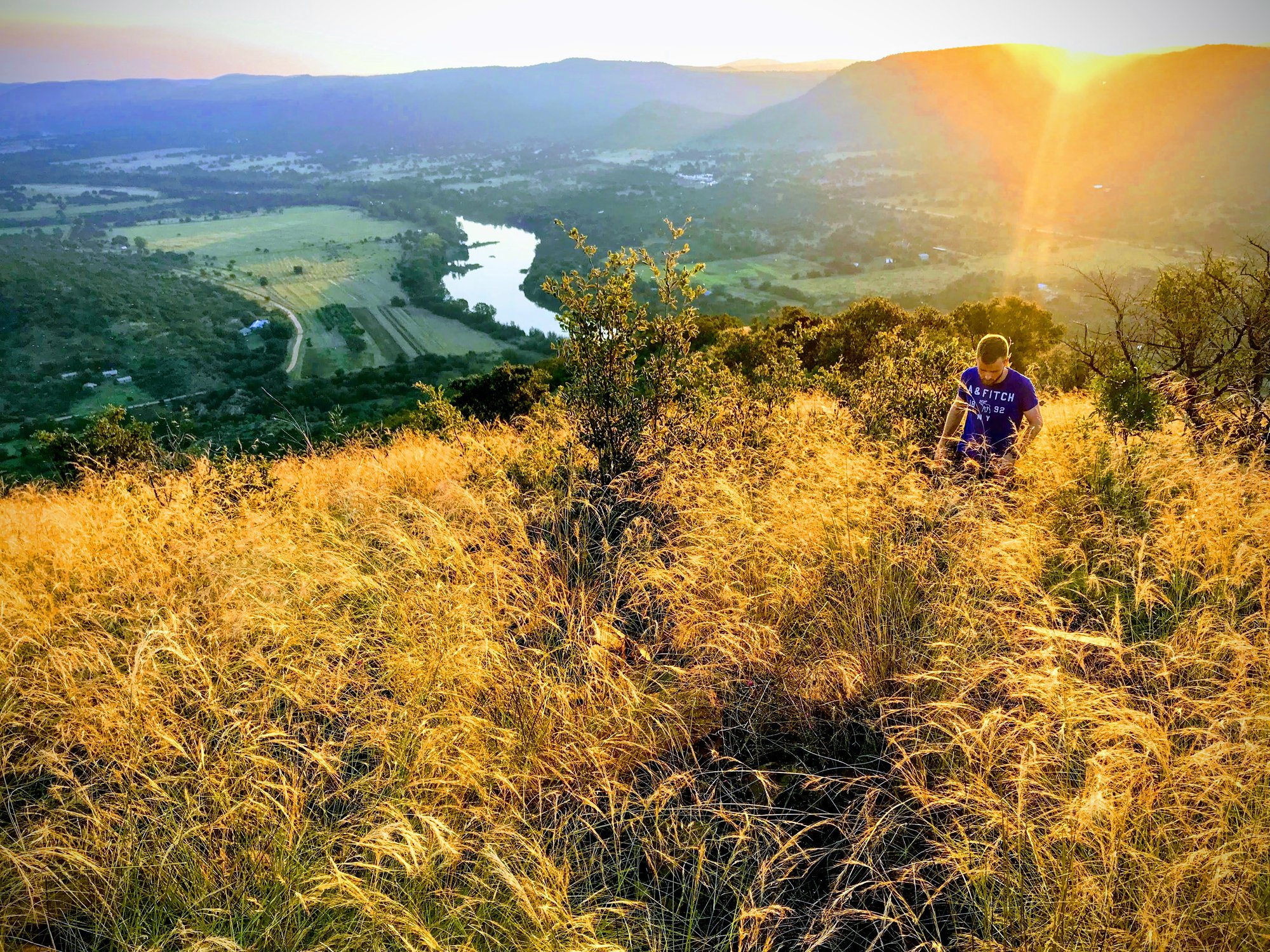
The eroded remains of one of the largest asteroid impact structures on Earth, in South Africa's Free State.
Access
We haven't checked access for this place. Check the land manager's or local tourism site for hours, fees and closures, and stay off private or closed land.
Safety & respect
Craters are often remote, with rough tracks and no shade or water. Tell someone your plans and don't collect rocks where it's forbidden.
Lore note
About two billion years ago an asteroid struck what is now the Free State and left a crater that may have been 170 to 300 km wide. Erosion has since removed the crater itself, so what survives is deformed bedrock and a ring of hills around the central uplift known as the Vredefort Dome. Geologists confirmed the impact origin in 1961 after finding shatter cones in the rock, and the dome became a UNESCO World Heritage Site in 2005.
Map links
Official / public map link · Approx. -27.0000, 27.5000: feature coordinate, not a checked entrance · Pin source: Wikipedia article coordinates, cross-checked against Wikidata Q330095 P625 (same published centre) · The structure is far wider than one point. The decimal above is the centre published for the impact structure by Wikipedia and Wikidata, not a viewpoint or entrance.
Sources
- Wikipedia, Vredefort impact structure (CC BY-SA 4.0; read 12 Nov 2026): https://en.wikipedia.org/wiki/Vredefort_impact_structure
- Wikidata, Q330095 (coordinate location P625, country P17; read 12 Nov 2026): https://www.wikidata.org/wiki/Q330095
About two billion years ago an asteroid struck what is now the Free State and left a crater that may have been 170 to 300 km wide. Erosion has since removed the crater itself, so what survives is deformed bedrock and a ring of hills around the central uplift known as the Vredefort Dome. Geologists confirmed the impact origin in 1961 after finding shatter cones in the rock, and the dome became a UNESCO World Heritage Site in 2005.
This entry is part of our world atlas. The summary above is written in our own words from the Wikipedia article, and the map pin uses published coordinates cross-checked against Wikidata. We haven’t visited this place or checked current access.