Feature reference (not a verified entrance)
Three Natural Bridges
Last reviewed: not yet Next review
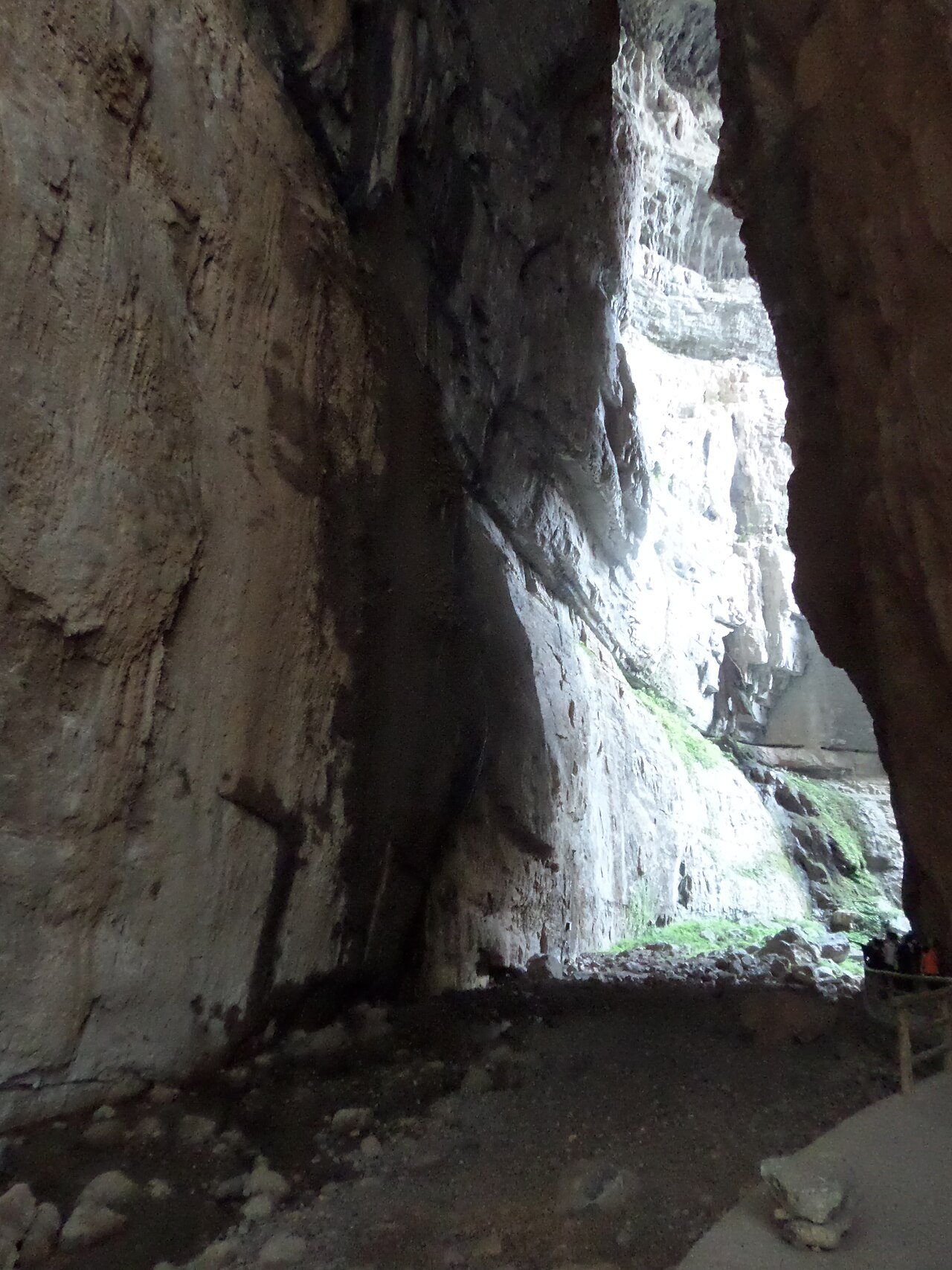
A rock formation in Wulong District, People's Republic of China.
Access
We haven't checked access for this place. Check the land manager's or local tourism site for hours, fees and closures, and stay off private or closed land.
Safety & respect
Stay on marked paths and behind barriers. Ground near caves, sinkholes, geysers and cliffs can be unstable or hot.
Lore note
The Three Natural Bridges (simplified Chinese: 天生三桥; traditional Chinese: 天生三橋; pinyin: Tiānshēng Sān Qiáo) are a series of natural limestone bridges located in Xiannüshan Town (仙女山镇), Wulong District, Chongqing Municipality, China. They lie within the Wulong Karst National Geology Park, itself a part of the South China Karst-Wulong Karst UNESCO World Heritage Site. In Chinese, the bridges are all named after dragons, namely Tianlong (Chinese: 天龙桥; lit.
Map links
Official / public map link · Approx. 29.4339, 107.8013: feature coordinate, not a checked entrance · Pin source: Wikipedia article coordinates, cross-checked against Wikidata Q7797661 P625 (within 2 km)
Sources
- Wikipedia, Three Natural Bridges (CC BY-SA 4.0; read 1 Nov 2026): https://en.wikipedia.org/wiki/Three_Natural_Bridges
- Wikidata, Q7797661 (coordinate location P625, country P17; read 1 Nov 2026): https://www.wikidata.org/wiki/Q7797661
The Three Natural Bridges (simplified Chinese: 天生三桥; traditional Chinese: 天生三橋; pinyin: Tiānshēng Sān Qiáo) are a series of natural limestone bridges located in Xiannüshan Town (仙女山镇), Wulong District, Chongqing Municipality, China. They lie within the Wulong Karst National Geology Park, itself a part of the South China Karst-Wulong Karst UNESCO World Heritage Site. In Chinese, the bridges are all named after dragons, namely Tianlong (Chinese: 天龙桥; lit.
This entry is part of our world atlas. The summary above is adapted from the Wikipedia article (CC BY-SA 4.0), and the map pin uses the coordinates published there, cross-checked against Wikidata. We haven’t visited this place or checked current access.