Feature reference (not a verified entrance)
Sudwala Caves
Last reviewed: not yet Next review
A show cave in ancient dolomite in Mpumalanga, South Africa, often described as one of the oldest caves in the world.
Access
We haven't checked access for this place. Check the land manager's or local tourism site for hours, fees and closures, and stay off private or closed land.
Safety & respect
Stay on marked paths and behind barriers. Ground near caves, sinkholes, geysers and cliffs can be unstable or hot.
Lore note
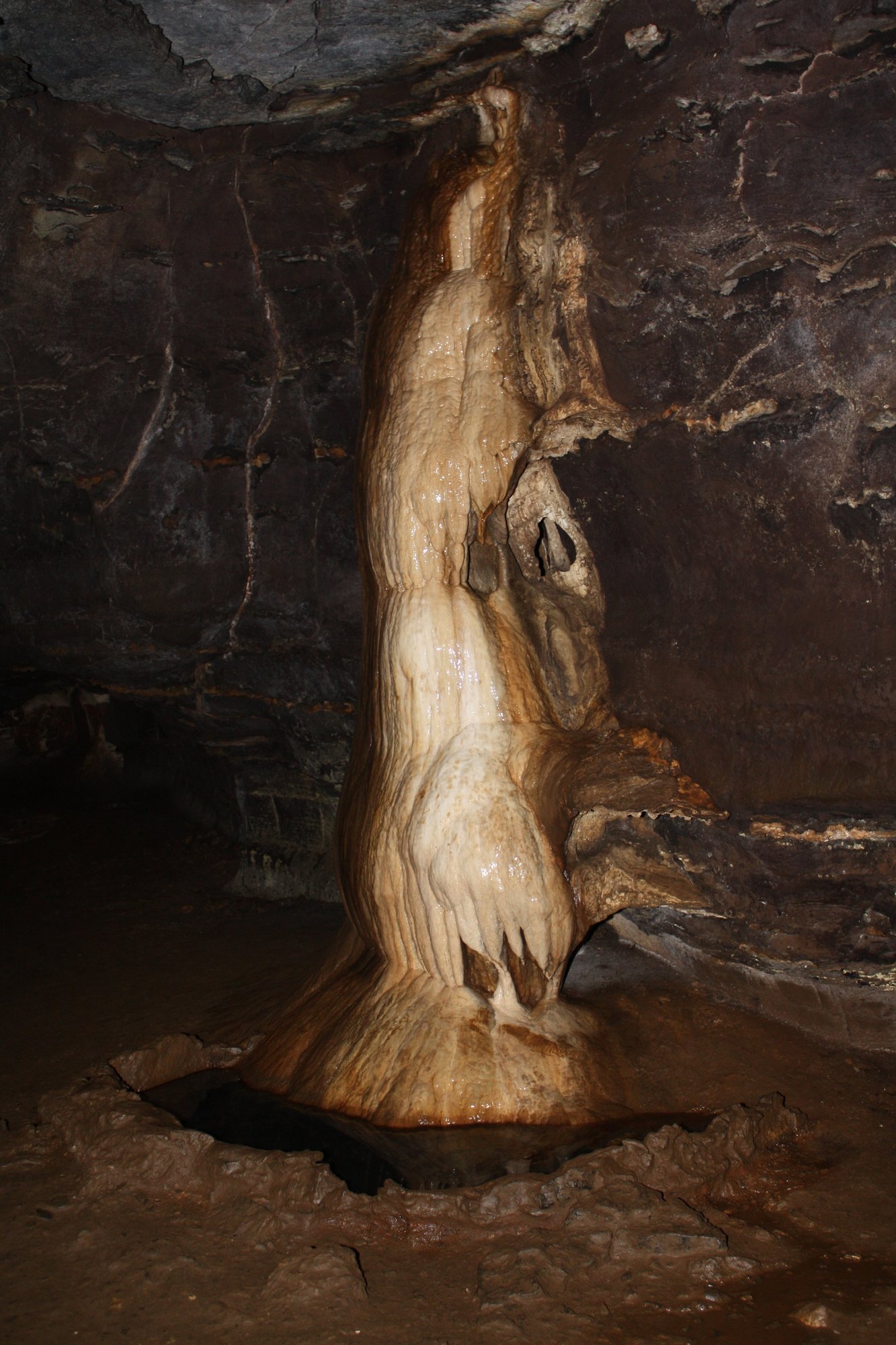
The Sudwala Caves formed roughly 240 million years ago in dolomite rock that is far older still. Formations inside have names such as the Screaming Monster and Samson's Pillar, and the rock holds fossil traces of early microbial life. A steady draught of fresh air from an unknown source flows through the caves, which people used as shelter in prehistoric times; they opened as a tourist attraction in the 1960s.
Map links
Official / public map link · Approx. -25.3697, 30.7002: feature coordinate, not a checked entrance · Pin source: Wikipedia article coordinates, cross-checked against Wikidata Q1686963 P625 (within 2 km)
Sources
- Wikipedia, Sudwala Caves (CC BY-SA 4.0; read 12 Nov 2026): https://en.wikipedia.org/wiki/Sudwala_Caves
- Wikidata, Q1686963 (coordinate location P625, country P17; read 12 Nov 2026): https://www.wikidata.org/wiki/Q1686963
The Sudwala Caves formed roughly 240 million years ago in dolomite rock that is far older still. Formations inside have names such as the Screaming Monster and Samson’s Pillar, and the rock holds fossil traces of early microbial life. A steady draught of fresh air from an unknown source flows through the caves, which people used as shelter in prehistoric times; they opened as a tourist attraction in the 1960s.
This entry is part of our world atlas. The summary above is written in our own words from the Wikipedia article, and the map pin uses published coordinates cross-checked against Wikidata. We haven’t visited this place or checked current access.