Sof Omar Caves
Last reviewed: not yet Next review
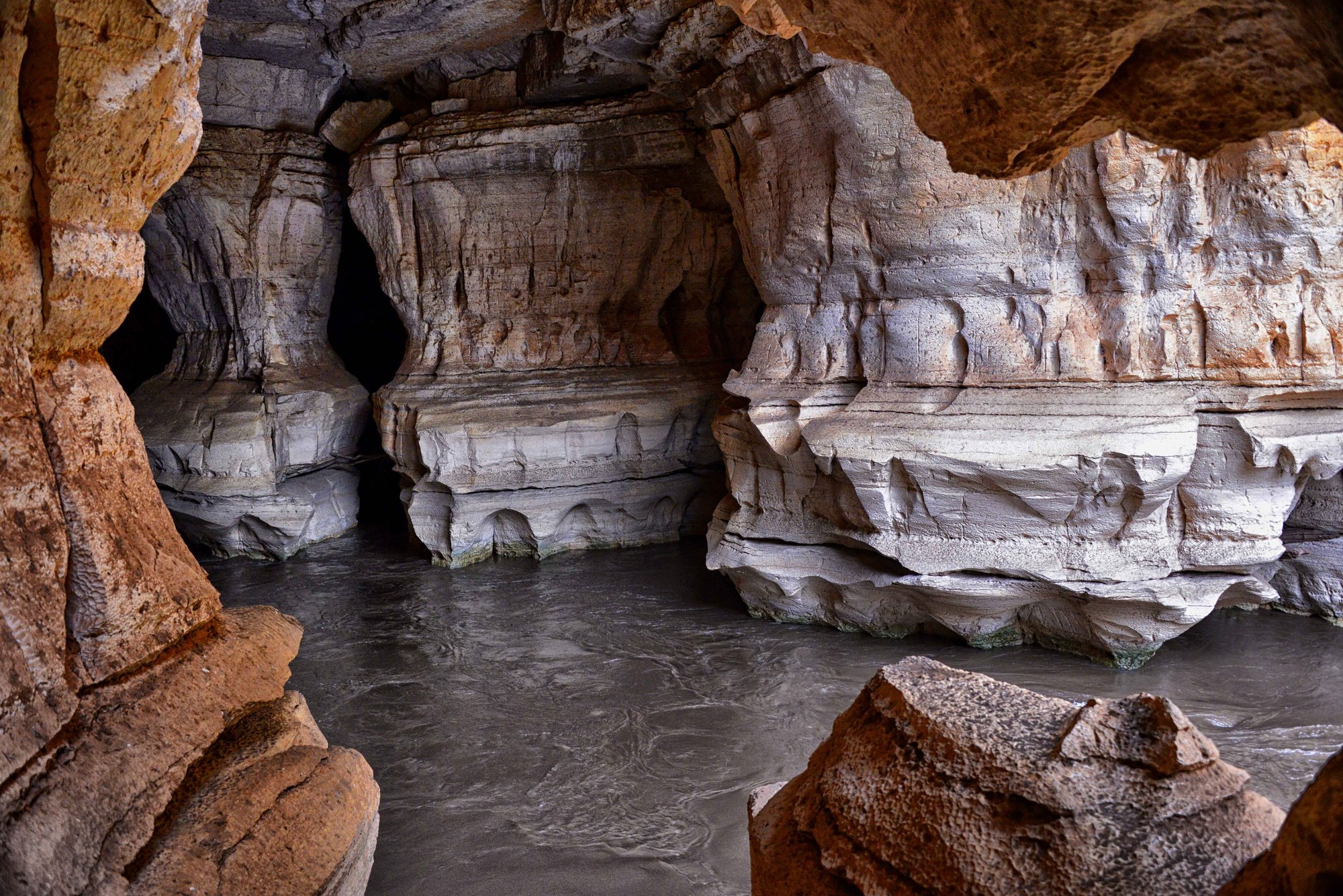
Ethiopia's longest cave, carved by the Weyib River and sacred in Islam and Oromo traditional religion.
Access
We haven't checked access for this place. Check the land manager's or local tourism site for hours, fees and closures, and stay off private or closed land.
Safety & respect
Stay on marked paths and behind barriers. Ground near caves, sinkholes, geysers and cliffs can be unstable or hot. Sacred site: cultural warning. Respect religious use, dress and behave as local custom asks, and photograph people or rites only with permission.
Lore note
The Weyib River sinks into Sof Omar and reappears about a kilometer away, having carved more than 15 km of passages with many pillars, including a well known Chamber of Columns. When surveyed in 1972 it was the longest known cave in Africa. Tradition names it after a Muslim holy man, and it has long been a religious center for Muslims and for followers of Oromo traditional religion.
Sources
- Wikipedia, Sof Omar Caves (CC BY-SA 4.0; read 12 Nov 2026): https://en.wikipedia.org/wiki/Sof_Omar_Caves
- Wikidata, Q3444339 (coordinate location P625, country P17; read 12 Nov 2026): https://www.wikidata.org/wiki/Q3444339
The Weyib River sinks into Sof Omar and reappears about a kilometer away, having carved more than 15 km of passages with many pillars, including a well known Chamber of Columns. When surveyed in 1972 it was the longest known cave in Africa. Tradition names it after a Muslim holy man, and it has long been a religious center for Muslims and for followers of Oromo traditional religion.
This entry is part of our world atlas. The summary above is written in our own words from the Wikipedia article, with details checked against Wikidata. It is not shown on the site map. Sacred site in Islam and Oromo traditional religion: no pin, by our sacred-site convention. We haven’t visited this place or checked current access.