Feature reference (not a verified entrance)
Mount Tambora
Last reviewed: not yet Next review
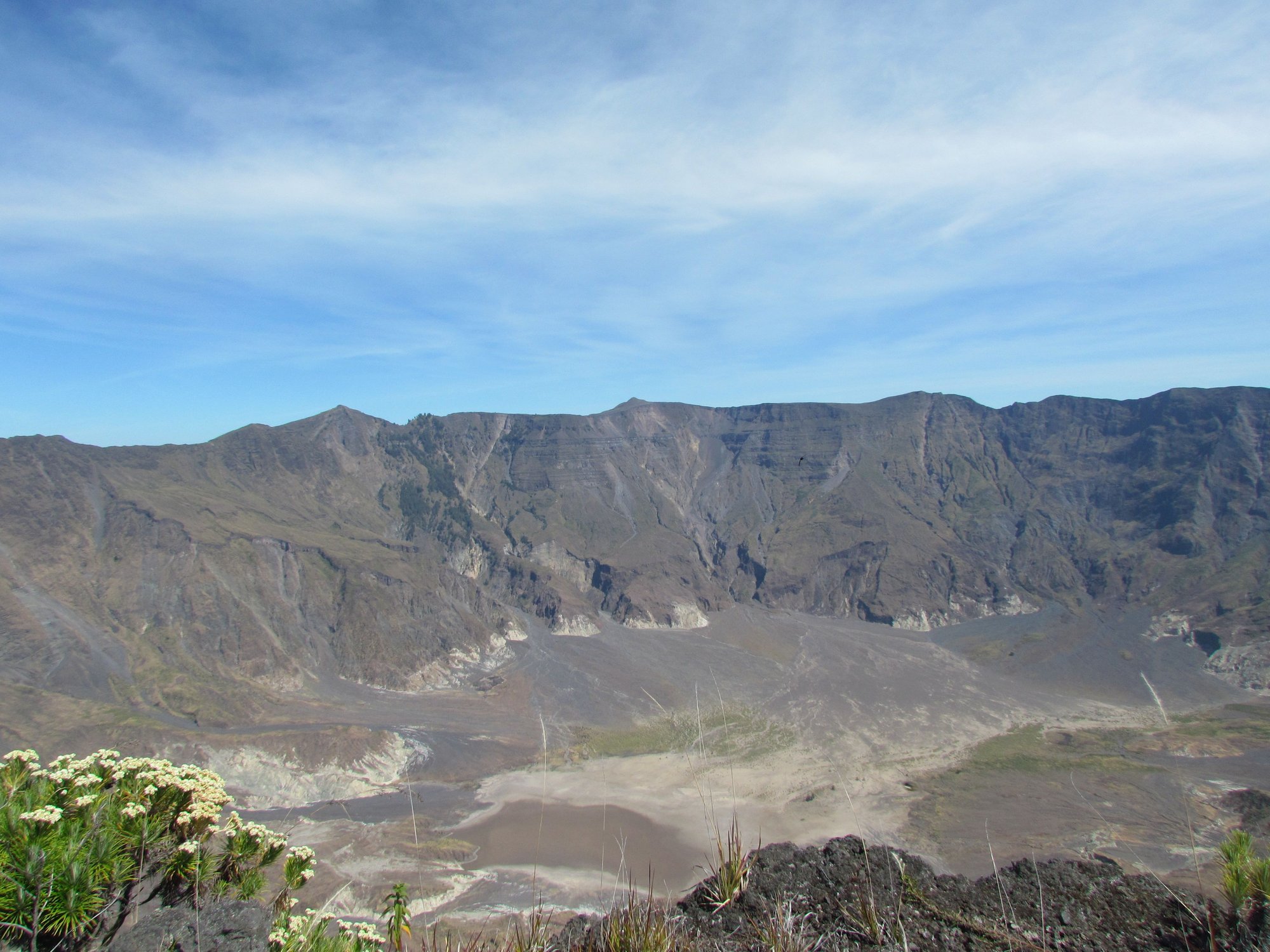
The Sumbawa volcano whose 1815 eruption, the largest in recorded history, left a vast caldera and caused the Year Without a Summer.
Access
We haven't checked access for this place. Check the land manager's or local tourism site for hours, fees and closures, and stay off private or closed land.
Safety & respect
Stay on marked paths and behind barriers. Ground near caves, sinkholes, geysers and cliffs can be unstable or hot.
Lore note
Tambora forms its own peninsula on the north of Sumbawa, part of the Sunda Arc of volcanic islands. Its 1815 eruption was the largest in recorded history, rated 7 on the Volcanic Explosivity Index, and threw out up to 150 cubic km of material. The ash and gas it sent into the atmosphere cooled the planet so much that 1816 became known as the Year Without a Summer. The mountain is still active, its summit is a wide caldera, and it draws volcanologists, archaeologists and biologists as well as a few hikers.
Map links
Official / public map link · Approx. -8.2453, 117.9928: feature coordinate, not a checked entrance · Pin source: Wikipedia article coordinates, cross-checked against Wikidata Q168714 P625 (within 2 km) · Marks the summit caldera area; OpenStreetMap places the volcano 0.39 km away.
Sources
- Wikipedia, Mount Tambora (CC BY-SA 4.0; read 12 Nov 2026): https://en.wikipedia.org/wiki/Mount_Tambora
- Wikidata, Q168714 (coordinate location P625, country P17; read 12 Nov 2026): https://www.wikidata.org/wiki/Q168714
Tambora forms its own peninsula on the north of Sumbawa, part of the Sunda Arc of volcanic islands. Its 1815 eruption was the largest in recorded history, rated 7 on the Volcanic Explosivity Index, and threw out up to 150 cubic km of material. The ash and gas it sent into the atmosphere cooled the planet so much that 1816 became known as the Year Without a Summer. The mountain is still active, its summit is a wide caldera, and it draws volcanologists, archaeologists and biologists as well as a few hikers.
This entry is part of our world atlas. The summary above is written in our own words from the Wikipedia article, and the map pin uses published coordinates cross-checked against Wikidata. We haven’t visited this place or checked current access.