Feature reference (not a verified entrance)
Kavachi
Last reviewed: not yet Next review
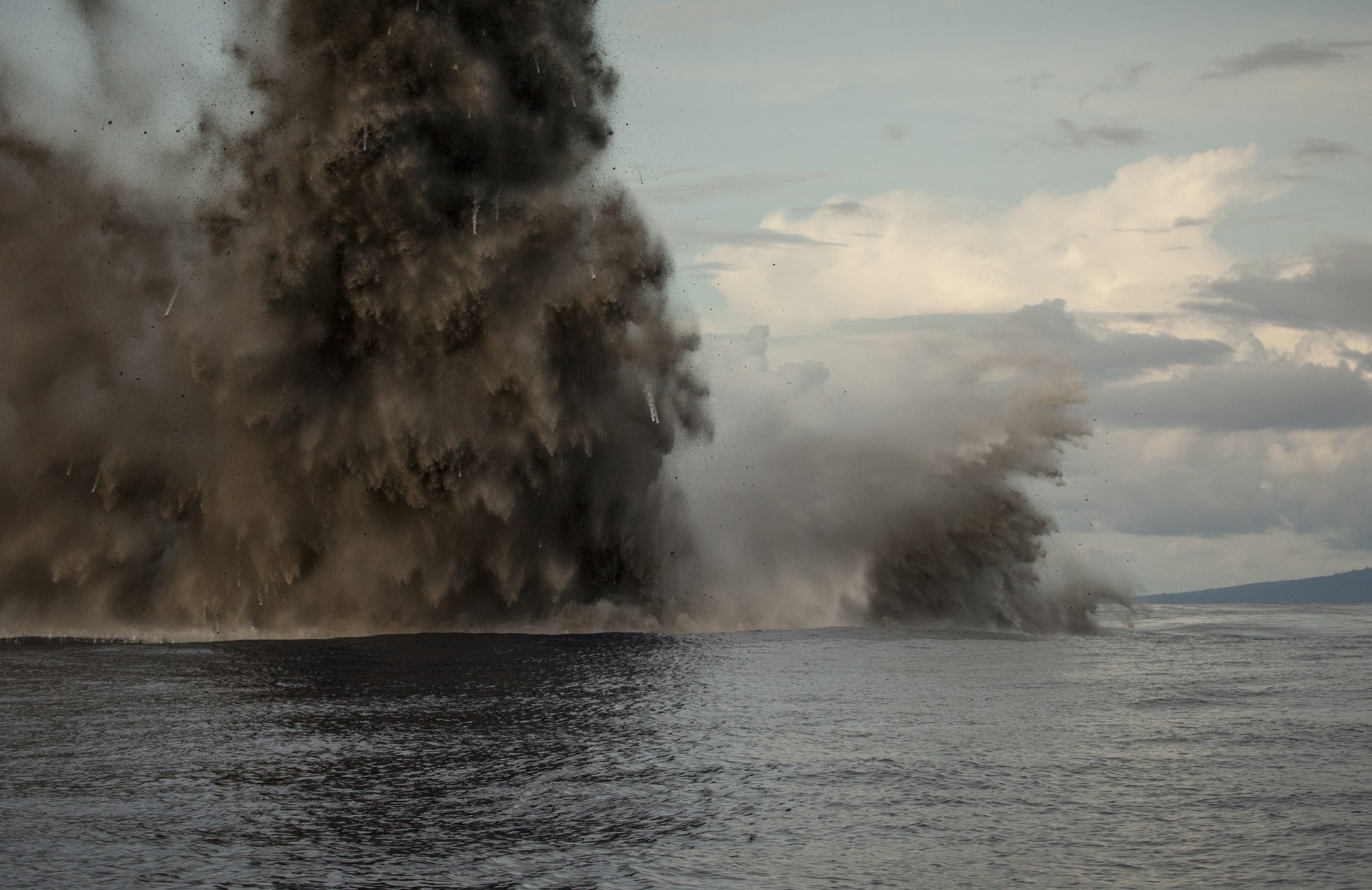
One of the most active submarine volcanoes in the Pacific, which keeps building islands the sea wears away, with sharks living in its crater.
Access
We haven't checked access for this place. Check the land manager's or local tourism site for hours, fees and closures, and stay off private or closed land.
Safety & respect
Stay on marked paths and behind barriers. Ground near caves, sinkholes, geysers and cliffs can be unstable or hot. Eruptions start without warning; stay clear of discoloured water.
Lore note
Kavachi, a submarine volcano south of Vangunu, is named after a sea god of the New Georgia islanders and is known locally as Rejo te Kavachi, Kavachi's oven. Its cone rises from about 1,100 m of water on a base some 8 km wide, with the vent just below the surface. Since its first recorded eruption in 1939 it has broken the surface and been eroded back into the sea at least eight times; a 15 m island built in 2003 soon disappeared. In 2015 researchers found scalloped hammerheads, silky sharks and sixgill stingrays living inside the crater, which earned it the nickname Sharkcano.
Map links
Official / public map link · Approx. -8.9936, 157.9725: feature coordinate, not a checked entrance · Pin source: Wikipedia article coordinates, cross-checked against Wikidata Q987676 P625 (within 2 km) · Vent position fixed by a 2000 survey; matches OpenStreetMap within 0.01 km. The vent is underwater.
Sources
- Wikipedia, Kavachi (CC BY-SA 4.0; read 12 Nov 2026): https://en.wikipedia.org/wiki/Kavachi
- Wikidata, Q987676 (coordinate location P625, country P17; read 12 Nov 2026): https://www.wikidata.org/wiki/Q987676
Kavachi, a submarine volcano south of Vangunu, is named after a sea god of the New Georgia islanders and is known locally as Rejo te Kavachi, Kavachi’s oven. Its cone rises from about 1,100 m of water on a base some 8 km wide, with the vent just below the surface. Since its first recorded eruption in 1939 it has broken the surface and been eroded back into the sea at least eight times; a 15 m island built in 2003 soon disappeared. In 2015 researchers found scalloped hammerheads, silky sharks and sixgill stingrays living inside the crater, which earned it the nickname Sharkcano.
This entry is part of our world atlas. The summary above is written in our own words from the Wikipedia article, and the map pin uses published coordinates cross-checked against Wikidata. We haven’t visited this place or checked current access.