Feature reference (not a verified entrance)
Goat Paddock crater
Last reviewed: not yet Next review
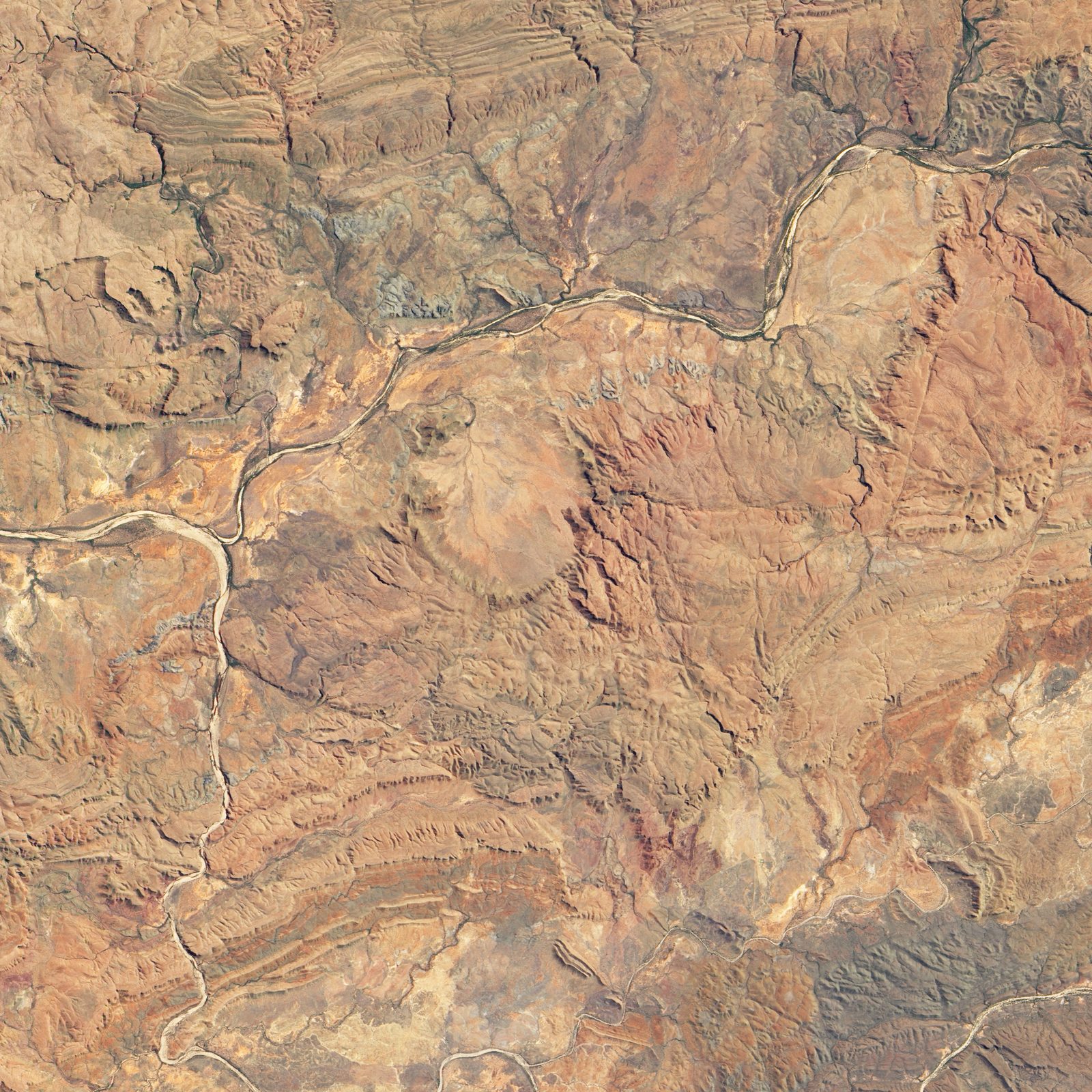
Goat Paddock crater is an impact crater in Western Australia, Australia.
Access
We haven't checked access for this place. Check the land manager's or local tourism site for hours, fees and closures, and stay off private or closed land.
Safety & respect
Craters are often remote, with rough tracks and no shade or water. Tell someone your plans and don't collect rocks where it's forbidden.
Lore note
Goat Paddock Crater is an impact crater in a range of gently dipping Proterozoic sandstone in the Kimberley Region of northern Western Australia, 106 km west-southwest of Halls Creek. It is interpreted as an ancient meteorite impact crater, the evidence including breccia containing melted rocks, silica glass, shatter cones and shocked quartz. Drilling shows that the crater is filled with about 200 meters of ancient lake sediments containing Early Eocene pollen, this age thus giving a minimum estimate for the age of the crater itself.
Map links
Official / public map link · Approx. -18.3333, 126.6667: feature coordinate, not a checked entrance · Pin source: Wikipedia article coordinates, cross-checked against Wikidata Q1533447 P625 (within 2 km)
Sources
- Wikipedia, Goat Paddock crater (CC BY-SA 4.0; read 1 Nov 2026): https://en.wikipedia.org/wiki/Goat_Paddock_crater
- Wikidata, Q1533447 (coordinate location P625, country P17; read 1 Nov 2026): https://www.wikidata.org/wiki/Q1533447
Goat Paddock Crater is an impact crater in a range of gently dipping Proterozoic sandstone in the Kimberley Region of northern Western Australia, 106 km west-southwest of Halls Creek. It is interpreted as an ancient meteorite impact crater, the evidence including breccia containing melted rocks, silica glass, shatter cones and shocked quartz. Drilling shows that the crater is filled with about 200 meters of ancient lake sediments containing Early Eocene pollen, this age thus giving a minimum estimate for the age of the crater itself.
This entry is part of our world atlas. The summary above is adapted from the Wikipedia article (CC BY-SA 4.0), and the map pin uses the coordinates published there, cross-checked against Wikidata. We haven’t visited this place or checked current access.