Feature reference (not a verified entrance)
Caverna do Diabo
Last reviewed: not yet Next review
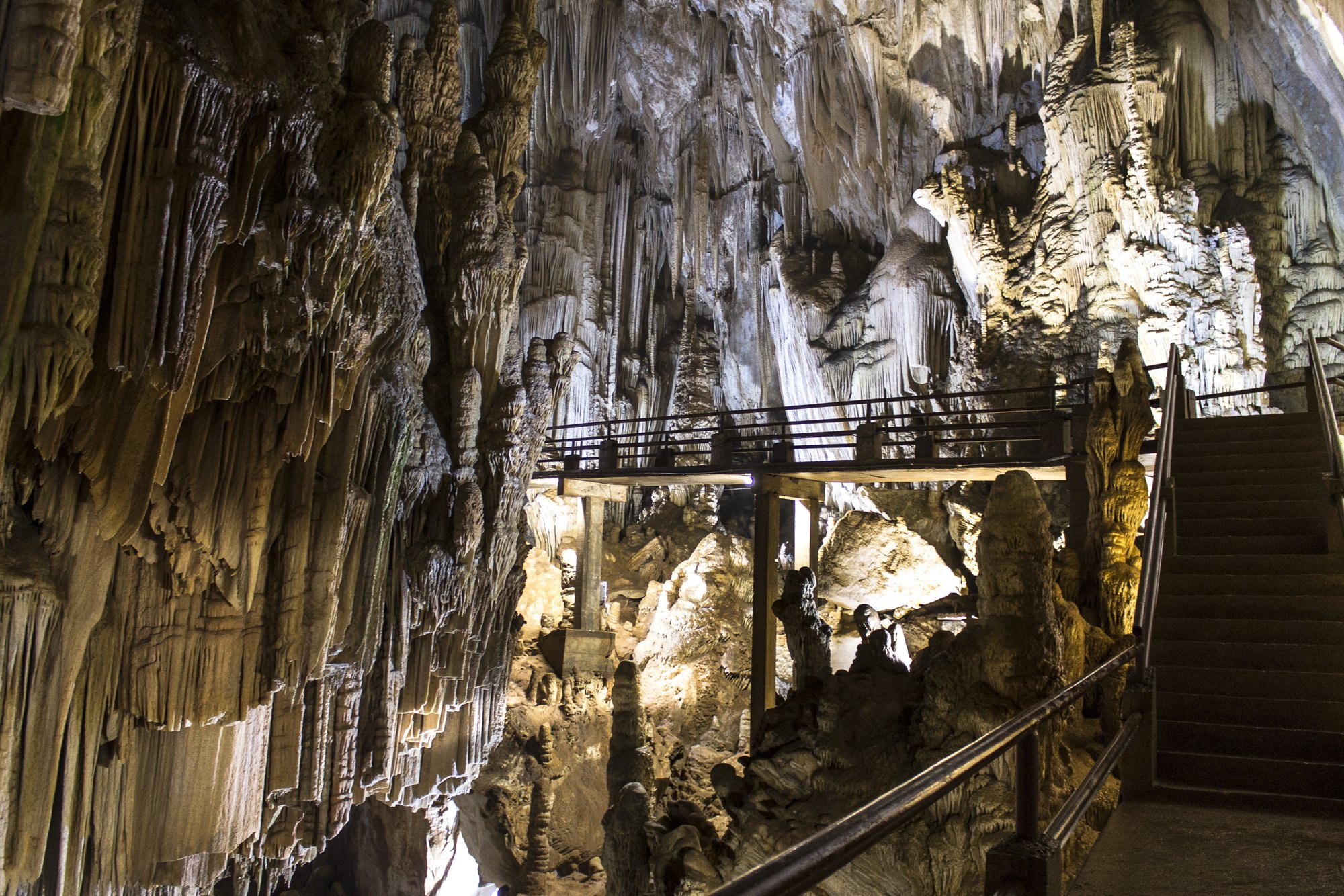
The Devil's Cave in São Paulo state, where legend held that dripping water turned people to stone and the entrance echoed with the groans of lost souls.
Access
We haven't checked access for this place. Check the land manager's or local tourism site for hours, fees and closures, and stay off private or closed land.
Safety & respect
Stay on marked paths and behind barriers. Ground near caves, sinkholes, geysers and cliffs can be unstable or hot.
Lore note
Also called Caverna da Tapagem, this limestone cave has close to 10 km of mapped galleries full of curtains, columns and calcite cascades behind an entrance about 40 m high. The explorer Richard Krone recorded it in 1886. Its popular name, Devil's Cave, took hold in the 1960s from local legends: Indigenous people who lived nearby believed drips from the ceiling could turn a person to stone, so the strange formations were petrified people and animals, and later settlers said the noises at the entrance were the groans of souls punished by the devil. Its grandest hall is known as the Cathedral.
Map links
Official / public map link · Approx. -24.6258, -48.4047: feature coordinate, not a checked entrance · Pin source: Wikidata Q5055055 P625 for the cave itself, cross-checked against the OpenStreetMap cave entrance node for Caverna do Diabo (within 1.4 km). The state park item publishes a different point about 6 km away, which we did not use
Sources
- Wikipedia, Caverna da Tapagem (CC BY-SA 4.0; read 12 Nov 2026): https://en.wikipedia.org/wiki/Caverna_da_Tapagem
- Wikidata, Q5055055 (coordinate location P625, country P17; read 12 Nov 2026): https://www.wikidata.org/wiki/Q5055055
- OpenStreetMap, Caverna do Diabo cave entrance (read 12 Nov 2026): https://www.openstreetmap.org/search?query=Caverna%20do%20Diabo
Also called Caverna da Tapagem, this limestone cave has close to 10 km of mapped galleries full of curtains, columns and calcite cascades behind an entrance about 40 m high. The explorer Richard Krone recorded it in 1886. Its popular name, Devil’s Cave, took hold in the 1960s from local legends: Indigenous people who lived nearby believed drips from the ceiling could turn a person to stone, so the strange formations were petrified people and animals, and later settlers said the noises at the entrance were the groans of souls punished by the devil. Its grandest hall is known as the Cathedral.
This entry is part of our world atlas. The summary above is written in our own words from the Wikipedia article, and the map pin uses published coordinates cross-checked against Wikidata. We haven’t visited this place or checked current access.