The evidence: The Moeraki Boulders on Koekohe Beach
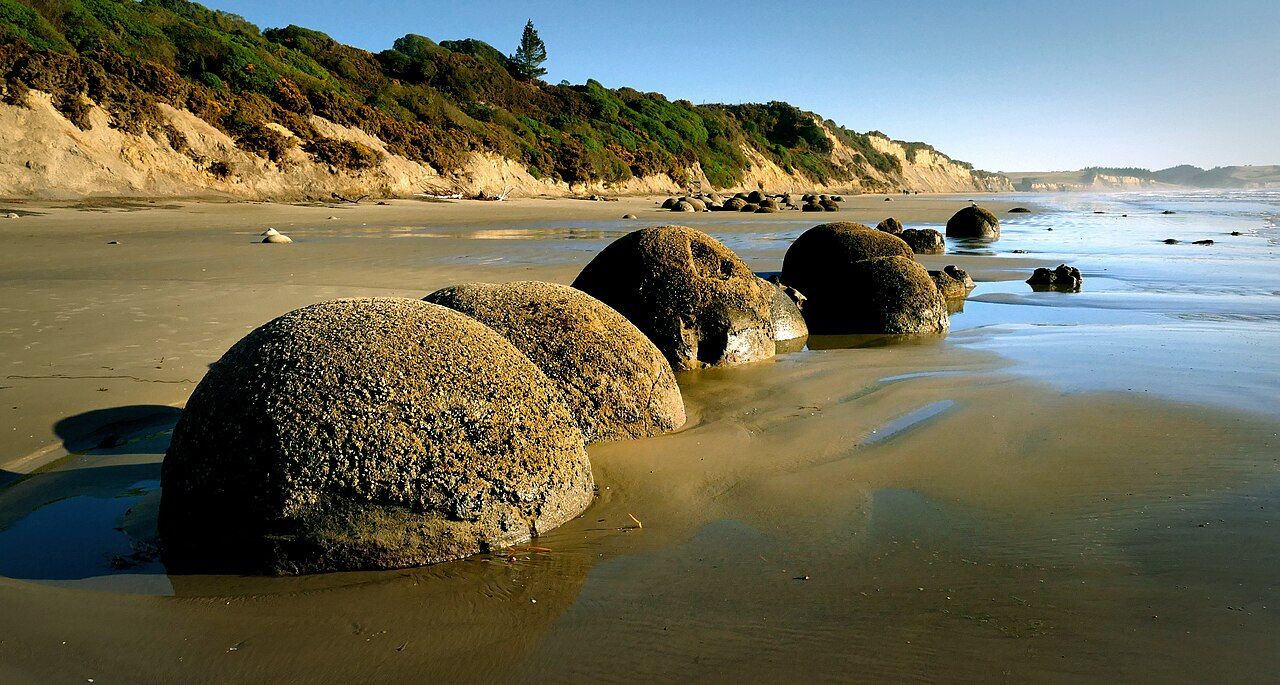
The Moeraki Boulders (Kaihinaki), Otago: Giant Stone Spheres on a Beach
Last reviewed Next review
We review and update every article weekly. When the record changes, so does the article. How we review
Huge round boulders sit on Koekohe Beach in Otago, New Zealand. We read what the encyclopedia, DOC and geologists say they are.
Verdict: Explained: the boulders are septarian concretions that grew in mudstone and were freed by the waves, and they are well worth the trip.
Original sources: Te Ara: 'Moeraki Boulders', An Encyclopaedia of New Zealand (1966) · Department of Conservation: Moeraki area
Sources 'Moeraki Boulders', An Encyclopaedia of New Zealand (1966), Te Ara; Department of Conservation, 'Moeraki area'; Boles, Landis and Dale, Journal of Sedimentary Research (1985), abstract
The 1966 encyclopedia describes gray septarian concretions on Koekohe Beach, eroded by the waves out of soft black mudstone cliffs, some weighing several tons, with cracks filled by yellow calcite. The Department of Conservation calls them the Moeraki Boulders/Kaihinaki and says they formed as calcite slowly built up in mudstone over about 4 million years. The Boles abstract gives sizes up to 2 m and a Paleocene host mudstone.
The 1966 entry also gives the Māori tradition that the boulders are eel baskets, calabashes and kūmara washed ashore from the wreck of the Ārai-te-uru canoe. We give that as the tradition it is, not as a claim to test.
Visiting: the boulders are best seen at low tide. Access is from the signposted car park off State Highway 1.
Sources
- “Moeraki Boulders”, An Encyclopaedia of New Zealand (1966), on Te Ara: teara.govt.nz (read 25 Oct 2026)
- Department of Conservation, “Moeraki area: Places to go in Otago”: doc.govt.nz (read 25 Oct 2026)
- Boles, J. R., C. A. Landis and P. Dale, “The Moeraki Boulders; anatomy of some septarian concretions”, Journal of Sedimentary Research (1985), abstract only (read 25 Oct 2026)
Weighing it
All three sources agree on the geology: these are concretions that grew inside the mudstone and were left on the beach as the cliffs wore back. Nothing about them is unexplained, but they are a striking thing to see.
Every image on this page is credited where it appears.
Verdict
Explained Explained: the boulders are septarian concretions that grew in mudstone and were freed by the waves, and they are well worth the trip.
Update log
-
We added this case file.
-
Weekly re-check of sources; no change to the record since filing. Next check November 9, 2026.
Discussion
Discuss this case on the on-site Community board — no GitHub account required. Prefer a private tip for the editorial team? Submit a Sighting.
House rules: Community guidelines.