The evidence: Frames from the recovered 1970 film, developed in 2025
▶ See the original photo at National Oceanography Centre (photos of the developed film) ↗ (not reproduced here: NOC copyright)
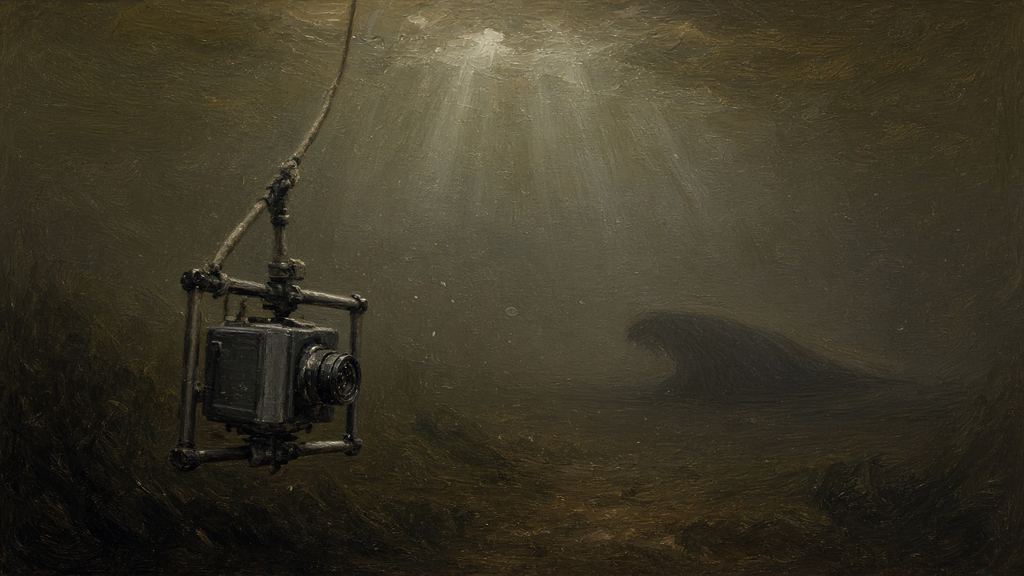
The Nessie Camera Trap That Waited 55 Years
Last reviewed Next review
We review and update every article weekly. When the record changes, so does the article. How we review
In 1970 a Chicago biologist sank baited cameras into Loch Ness to photograph the monster.
Verdict: A real 1970 camera trap was recovered, but its film was blank, so it tells us nothing about a monster.
Original sources: University of Otago, 5 Sep 2019 · National Oceanography Centre, 1 Apr 2025 · BBC News, camera found · BBC News, Repair Shop restoration (4 Feb 2026) · CBS News
Sources National Oceanography Centre (1 Apr 2025); BBC News (Apr 2025; 4 Feb 2026); CBS News (Apr 2025)
In 1970 Roy Mackal, an American biologist at the University of Chicago and scientific director of the Loch Ness Investigation Bureau, tried something more patient than watching the surface. His team lowered camera traps into the loch: a clockwork Kodak Instamatic with a flash cube, sealed in a glass tube and wired to a baited line on a float. If something took the bait, a magnetic switch fired the camera. Each trap could take four pictures. Adrian Shine of the Loch Ness Project, who later helped identify the device, says six were deployed and three were lost in a gale that year.
Found by accident
In March 2025 the UK’s National Oceanography Centre was running trials of an Autosub, the underwater vehicle the public named Boaty McBoatface. Part of an old mooring wrapped around its propeller, and the vehicle came up with one of Mackal’s lost traps attached. The housing had kept the camera dry. NOC gave the depth as about 180 m; the BBC quoted Shine at more than 130 m.
A NOC engineer developed the film. CBS reported about two dozen exposures. They show the loch’s dark, peat-stained water and nothing else. Shine thinks the strong underwater currents probably tripped the bait line.
What happened next
NOC handed the camera, housing and film to the Loch Ness Centre in Drumnadrochit. In February 2026 the BBC reported that its program The Repair Shop on the Road had restored the camera to working order for display there.
What the water says
In 2018 a team led by geneticist Neil Gemmell of the University of Otago went at the question in a different way. Instead of waiting for a camera to catch something, they took 250 water samples around the loch, through its center and down to the deepest parts, and sequenced the DNA that animals shed into the water. They announced the results in September 2019.
They found no DNA from anything like a plesiosaur or other reptile. They also found no shark, no catfish and no sturgeon, three of the big-fish ideas often offered for Nessie. What they did find was a lot of eel DNA, at nearly every site they sampled.
Gemmell was careful about what that means. eDNA shows an animal is there, not how big it is, so the data cannot say whether any of those eels is unusually large. He said giant eels “remain a plausible idea” that would need more work to confirm or rule out, and noted that the giant-eel explanation was first put forward back in 1933. The survey also picked up DNA from people, dogs, sheep, cattle, deer, badgers, foxes and birds washing in from the land.
For us the result fits the camera trap above: careful looking finds a normal loch, and nothing that needs a monster.
Sources
- University of Otago, “First eDNA Study Of Loch Ness Points To Something Fishy”, 5 Sep 2019: otago.ac.nz
- National Oceanography Centre, “NOC ocean robot finds long lost Loch Ness monster camera trap” (1 Apr 2025)
- BBC News, “Camera set up to catch Loch Ness Monster unearthed”
- BBC News, “Nessie camera pulled from loch gets Repair Shop treatment” (4 Feb 2026)
- CBS News, “Lost Loch Ness Monster camera from 1970 accidentally found by Boaty McBoatface”
Weighing it
The find, the attribution to Mackal’s 1970 project and the blank film are reported consistently by NOC, the BBC and CBS. The only disagreement is the depth. It is not evidence for or against a Loch Ness animal; it is a piece of the hunt’s own history that came back up. The map pin marks Drumnadrochit, not the recovery point.
Verdict
Explained A real 1970 camera trap was recovered, but its film was blank, so it tells us nothing about a monster.
Evidence ledger
Each claim in this file, the source it rests on, and how well it holds up: 5 corroborated · 1 disputed. What the labels mean.
| Claim | Source | Type · date | Status |
|---|---|---|---|
| A University of Otago-led team took 250 water samples across Loch Ness and sequenced the DNA in them. | University of Otago (5 Sep 2019) | official · 2019 | corroborated |
| No reptile, shark, catfish or sturgeon DNA was found; eel DNA turned up at nearly every site sampled.eDNA cannot show how big the eels are. | University of Otago (5 Sep 2019) | official · 2019 | corroborated |
| NOC's Autosub vehicle ('Boaty McBoatface') recovered a camera trap from Loch Ness during engineering trials when its mooring caught the propeller. | NOC (1 Apr 2025); BBC; CBS | official · 2025 | corroborated |
| The trap was one of six deployed in 1970 by Prof. Roy Mackal of the Loch Ness Investigation Bureau; three were lost in a gale.Identification by Shine; no deployment log is published. | Adrian Shine, via NOC and CBS | press · 2025 | corroborated |
| The film developed and shows no animal. | NOC; BBC; CBS | official · 2025 | corroborated |
| Recovery depth was about 180 m.Sources differ. | NOC (180 m); BBC quotes Shine at more than 130 m | press · 2025 | disputed |
Update log
-
We added this case file.
-
Weekly re-check of sources; no change to the record since filing. Next check November 9, 2026.
Discussion
Discuss this case on the on-site Community board — no GitHub account required. Prefer a private tip for the editorial team? Submit a Sighting.
House rules: Community guidelines.