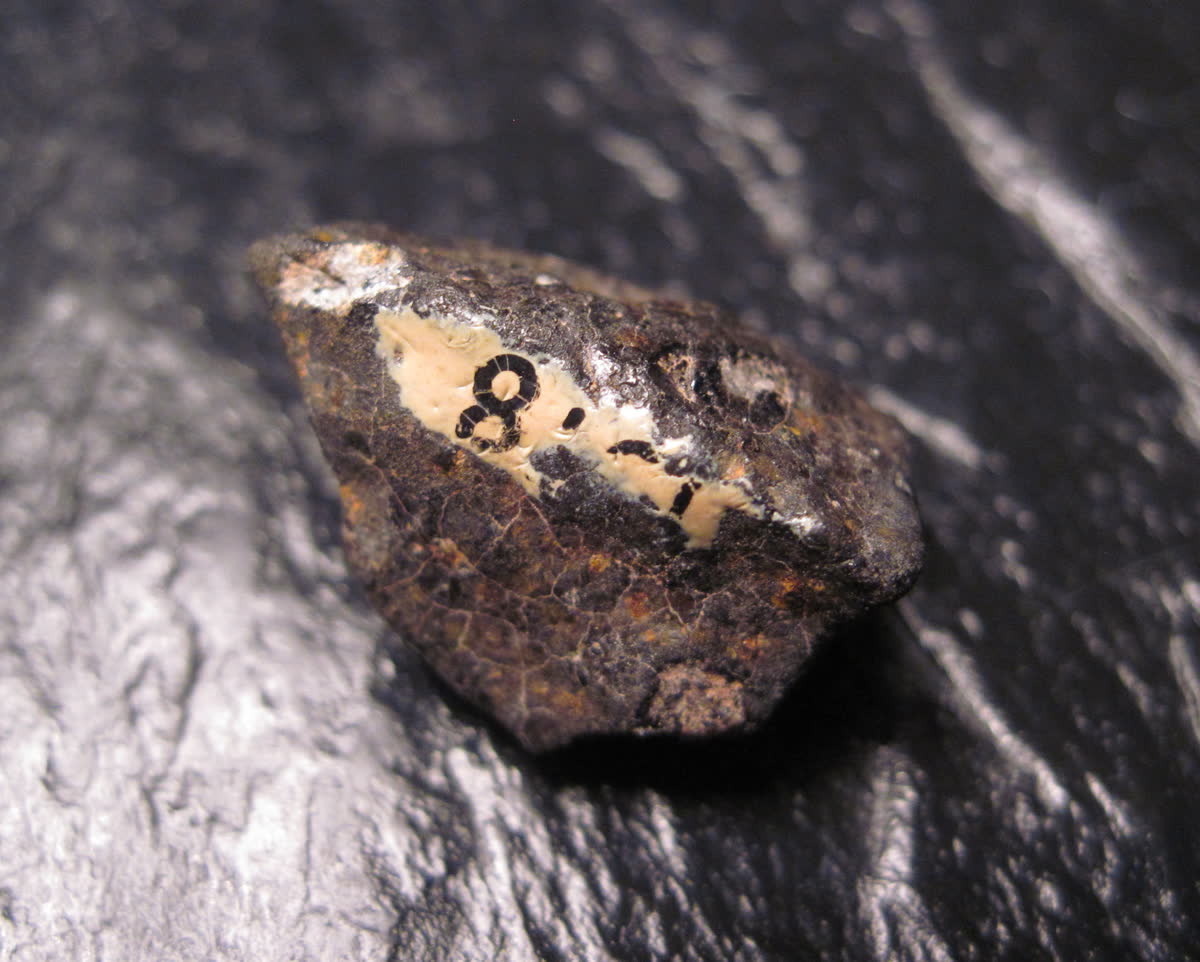
No photograph of the 1912 fall itself is known to us; the image shows a recovered stone.
The Holbrook Meteorite Shower, 19 July 1912
Last reviewed Next review
We review and update every article weekly. When the record changes, so does the article. How we review
An exploding fireball dropped thousands of stones near Holbrook, Arizona.
Verdict: A witnessed meteorite fall: the stones are cataloged, classified and held in collections.
Original sources: Meteoritical Bulletin Database, Holbrook
Sources Meteoritical Bulletin Database (Holbrook); Lunar and Planetary Institute (David Kring)
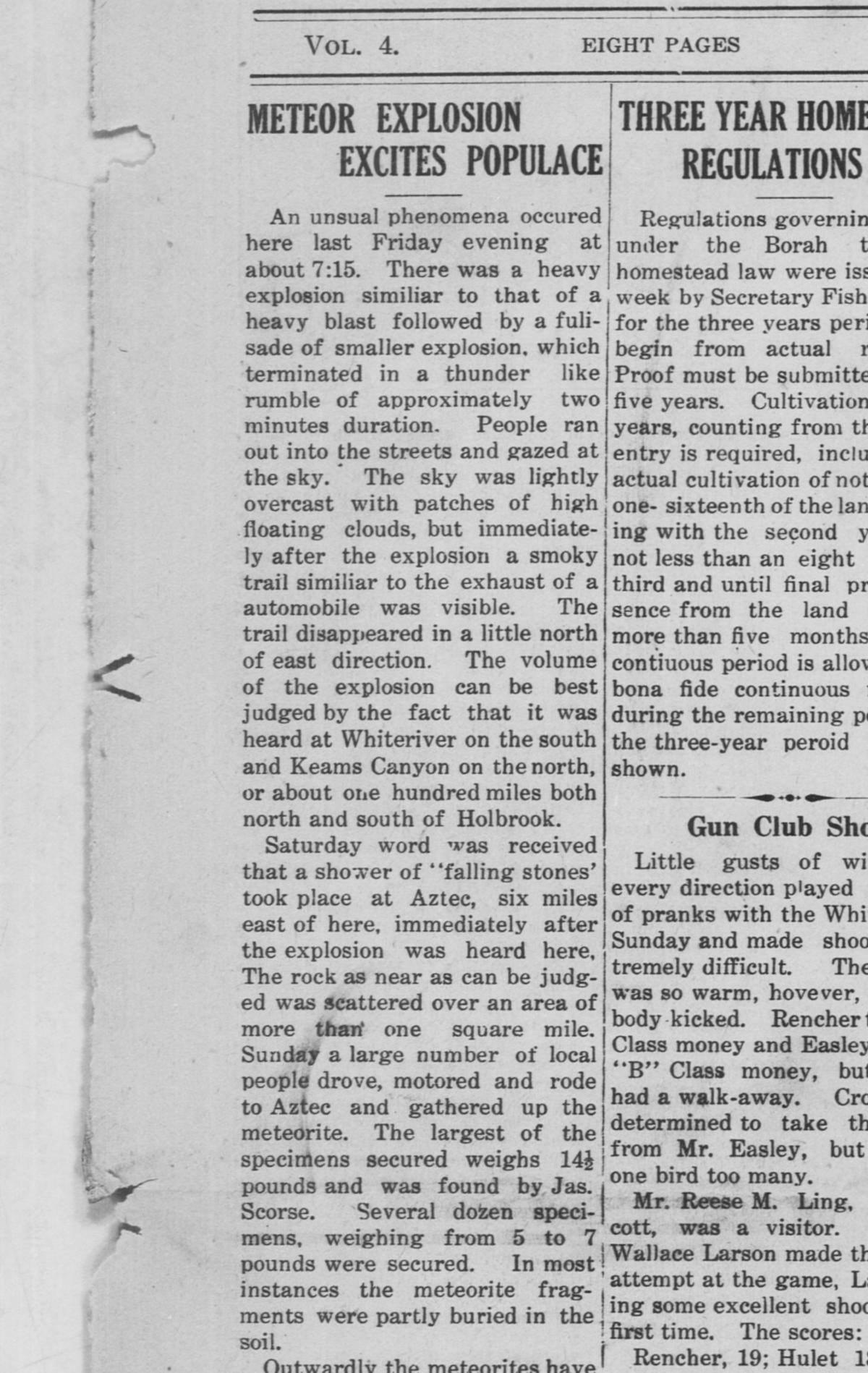
On 19 July 1912 a fireball came over northeast Arizona near Holbrook. People saw a smoky trail and heard explosions, and then stones fell over a strip of ground about three miles long and half a mile wide. According to the Lunar and Planetary Institute, about 14,000 pieces were picked up, weighing 481 pounds in all, most of them small.
The Meteoritical Society’s official database lists Holbrook as an observed fall, a stony meteorite of type L/LL6. It records about 220 kg of material, a smaller figure than the LPI total, and the two numbers likely reflect different counts; we report both.
Sources
- Meteoritical Bulletin Database, “Holbrook”: lpi.usra.edu
- Lunar and Planetary Institute, David A. Kring, Holbrook meteorite page
- Image: Jon Taylor, “Holbrook meteorite AMNH”, Wikimedia Commons, CC BY-SA 2.0: commons.wikimedia.org

Every image on this page is credited where it appears.
Verdict
Explained A witnessed meteorite fall: the stones are cataloged, classified and held in collections.
Evidence ledger
Each claim in this file, the source it rests on, and how well it holds up: 2 corroborated. What the labels mean.
| Claim | Source | Type · date | Status |
|---|---|---|---|
| Holbrook is an observed fall from 1912, classified L/LL6, with about 220 kg recovered. | Meteoritical Bulletin Database | scholarly | corroborated |
| Witnesses saw a smoky trail and heard explosions; about 14,000 specimens (481 lb) were collected from a strewn field about 3 miles by half a mile. | LPI, Kring | scholarly | corroborated |
Update log
-
We added this case file.
-
Weekly re-check of sources; no change to the record since filing. Next check November 9, 2026.
Discussion
Discuss this case on the on-site Community board — no GitHub account required. Prefer a private tip for the editorial team? Submit a Sighting.
House rules: Community guidelines.