Roundup page; each animal's original evidence is in the cited papers and museum pages.
Cryptids That Turned Out Real
Last reviewed Next review
We review and update every article weekly. When the record changes, so does the article. How we review
Some animals science dismissed as stories later swam, or walked, into view. Here is what proof looked like.
Verdict: Real animals do sometimes appear that experts had never documented, and each one arrived with a body, a photo or a specimen, which is the bar we hold every cryptid to.
Original sources: Kubodera & Mori 2005, Proc. R. Soc. B 272:2583 · Hawaii DLNR, Discovering Megamouth · Smith, Nature 143:455 (1939) · Royal Museum for Central Africa, Okapis · WWF, saola
Sources J. L. B. Smith, Nature (1939); Royal Museum for Central Africa; Kubodera & Mori, Proc. R. Soc. B (2005); Hawaii DLNR; WWF
People like to point at a few famous animals and say, “Science said this didn’t exist either.” It is a fair point, as far as it goes. The useful question is what changed scientists’ minds each time. Here is the record.
Giant squid: from sailors’ stories to a photograph
Dead giant squid had washed up and been studied for a long time, but nobody had photographed a live one in its own habitat. In 2004 Tsunemi Kubodera and Kyoichi Mori dropped a baited camera line to about 900 meters off the Ogasawara Islands, south of Tokyo. It took a run of photos of a giant squid attacking the bait, which they estimated was more than 8 meters long. They published the pictures in 2005.
Megamouth: a shark nobody knew
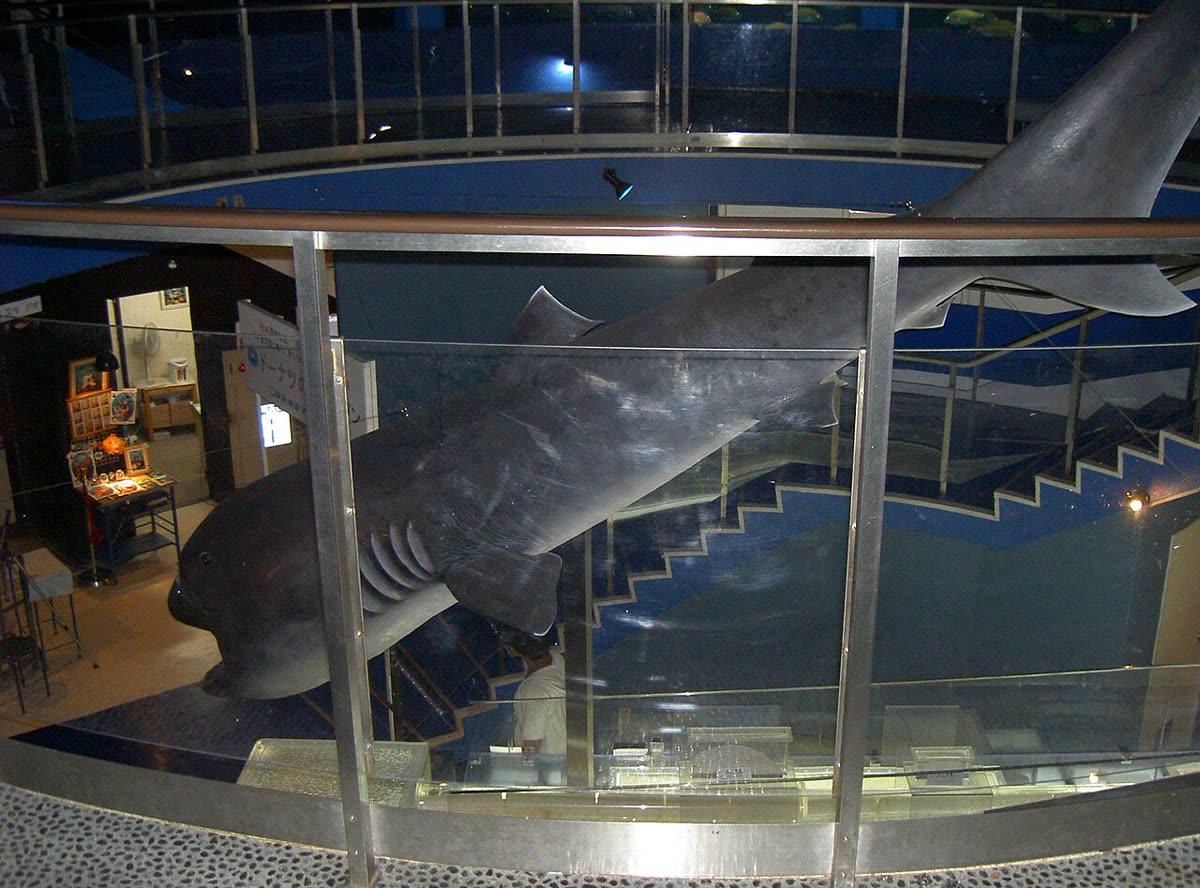
On 15 November 1976 a US Navy research ship lifted its sea anchor about 25 miles off Kahuku Point, Oahu, and found a large shark tangled in it. According to Hawaii’s Division of Aquatic Resources it was about 14.5 feet long and weighed about 1,500 pounds, with a huge mouth. Leighton Taylor, then at the Waikiki Aquarium, studied it and, seven years later, formally named it Megachasma pelagios, “giant yawner of the open sea.” It was a new family as well as a new species, and the original specimen is still held at the Bishop Museum in Honolulu.
Saola: a forest animal found through a skull
In 1992 a joint survey by Vietnam’s Ministry of Forestry and WWF in the Vu Quang area found an unusual skull with long, straight horns in a hunter’s home. It belonged to an animal scientists had never described: the saola. WWF calls it the first large mammal new to science in more than 50 years. It is still so rarely seen that its population is estimated at tens to perhaps a couple of hundred.
Coelacanth: a fossil fish in a trawl net
On 22 December 1938 a trawler working about 40 fathoms down, a few miles west of East London in South Africa, brought up a large fish that was still alive. It went to Miss Courtenay-Latimer, curator of the East London Museum, who sent a sketch to the chemist and fish expert J. L. B. Smith. In Nature in March 1939 Smith announced it as a crossopterygian, one of a group of fish “believed to have become extinct by the close of the Mesozoic period.” The museum had no way to preserve the soft body, so it was mounted by a taxidermist, but the skin and skeleton parts were enough.
Okapi: a zebra that was not a zebra
Travelers’ accounts of a striped forest animal in the Congo had been reaching Europe for years. According to the Royal Museum for Central Africa, Harry Johnston went looking in 1899 and came back with only two strips of hide. From those, Philip Sclater named it Equus johnstoni in 1901, a kind of horse. That same year Johnston obtained a full skin and two skulls, and they showed it was not a horse at all but a new relative of the giraffe. Ray Lankester renamed it Okapia johnstoni. The museum also notes the colonial scramble for specimens that followed.
What they have in common
Not one of these animals was accepted because of sightings alone. Each came with a body, a skull or clear photographs that others could examine. That is the standard we use on this site. A cryptid that turns out real will clear it the same way.
Sources
- Tsunemi Kubodera and Kyoichi Mori, “First-ever observations of a live giant squid in the wild”, Proceedings of the Royal Society B 272 (2005): doi.org
- Hawaii Department of Land and Natural Resources, “Discovering Megamouth”: dlnr.hawaii.gov
- WWF, “Saola”: worldwildlife.org
- J. L. B. Smith, “A Living Fish of Mesozoic Type”, Nature 143, 455 (1939): nature.com
- Royal Museum for Central Africa, “Okapis”: africamuseum.be
- Megamouth image: Oos, Wikimedia Commons, CC BY-SA 3.0

Every image on this page is credited where it appears.
Verdict
Explained Real animals do sometimes appear that experts had never documented, and each one arrived with a body, a photo or a specimen, which is the bar we hold every cryptid to.
Evidence ledger
Each claim in this file, the source it rests on, and how well it holds up: 5 corroborated. What the labels mean.
| Claim | Source | Type · date | Status |
|---|---|---|---|
| The first photographs of a live giant squid in the wild were taken in 2004 at about 900 m depth off the Ogasawara Islands, Japan; the animal was estimated at over 8 m long.Read via abstract only. | Kubodera & Mori, Proc. R. Soc. B 272 (2005) | scholarly · 2005 | corroborated |
| A previously unknown shark was brought up on a US Navy ship's sea anchor about 25 miles off Kahuku Point, Oahu, on 15 Nov 1976; it was about 14.5 ft and 1,500 lb and was named Megachasma pelagios. | Hawaii DLNR | official | corroborated |
| The saola was described in 1992 after a joint Vietnam Ministry of Forestry and WWF survey found a skull with long horns in a hunter's home at Vu Quang. | WWF | official | corroborated |
| A coelacanth, a fish of a group thought extinct since the end of the Mesozoic, was trawled alive at about 40 fathoms west of East London, South Africa, on 22 Dec 1938 and passed to Miss Courtenay-Latimer of the East London Museum.Read via Nature abstract page. | J. L. B. Smith, Nature 143:455 (18 Mar 1939) | scholarly · 1939 | corroborated |
| Sclater named the okapi Equus johnstoni in 1901 from two strips of hide; a full skin and two skulls obtained the same year showed it was a new giraffe relative, renamed Okapia johnstoni by Lankester. | Royal Museum for Central Africa (AfricaMuseum) | museum / archive | corroborated |
Update log
-
We added this case file.
-
Weekly re-check of sources; no change to the record since filing. Next check November 9, 2026.
Discussion
Discuss this case on the on-site Community board — no GitHub account required. Prefer a private tip for the editorial team? Submit a Sighting.
House rules: Community guidelines.